
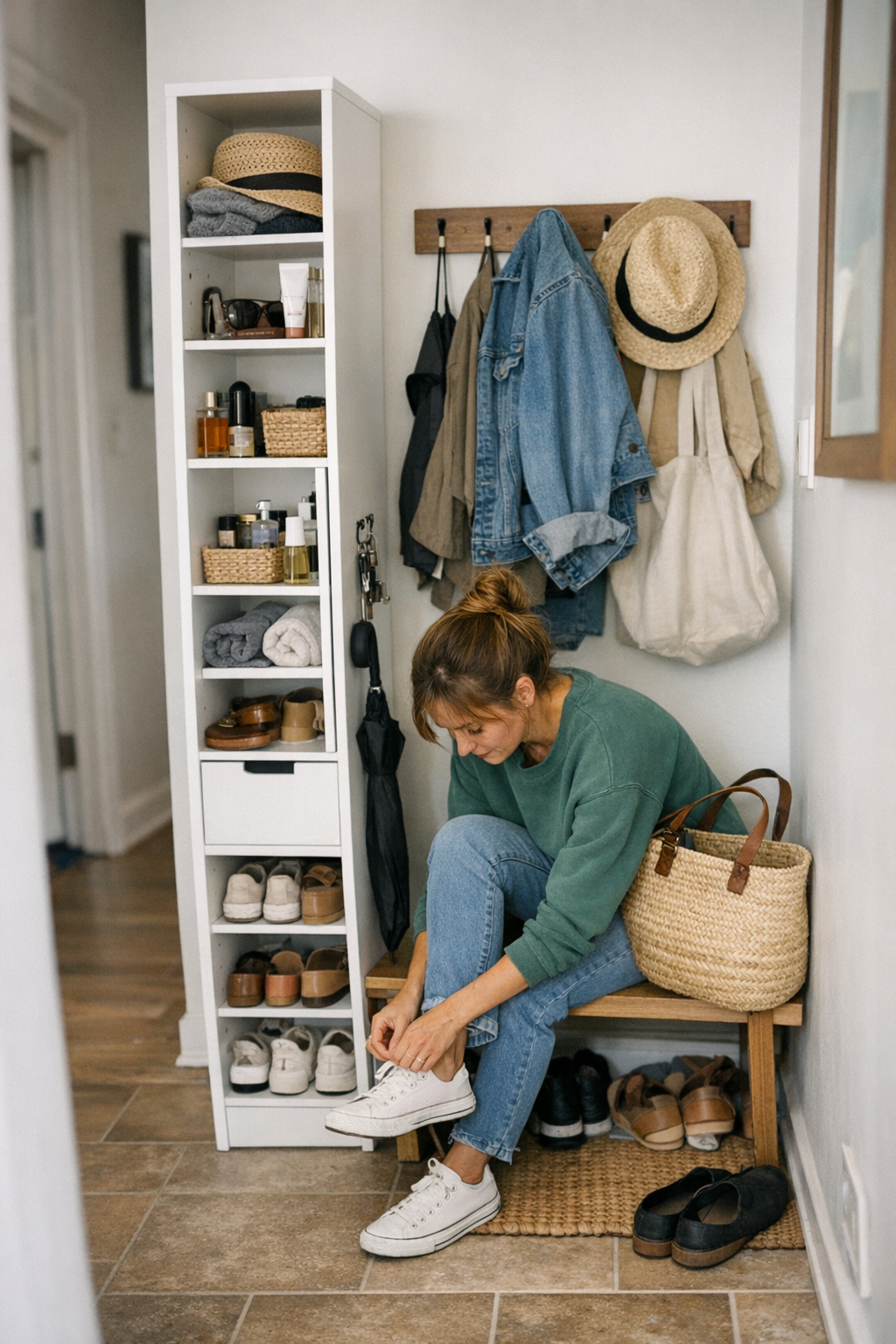
Mornings in a busy household often start at the doorway, where every day’s rhythm reveals itself in the smallest details. The narrow gap between the welcome mat and the hall, illuminated by soft light leaking through the door frame, becomes a stage for the day’s unfolding: sneaker steps, coats hastily hung or dropped, umbrellas leaning to dry, and keys landing with a familiar clink on a shallow tray. This small, carefully managed space holds the brunt of daily comings and goings, and its design plays a vital role in how smoothly the day begins.
The Art of Slim Storage in Small Hallways
Though it may seem counterintuitive, narrow storage solutions in confined entryways actually enhance the flow of movement. A slim cabinet tucked against the wall is not merely a spot to stash keys or mail—it’s a pivotal piece that embraces the chaos without overcrowding. It offers just enough hideaway to keep coats, shoes, and umbrellas but never so much that it impedes the natural path through the hall. Instead of a wide, imposing unit that can block movement or create bottlenecks, the slim cabinet respects the limited footprints of a narrow passageway.
Throughout the morning, the cabinet absorbs the hustle of family life. Mail accumulates in its slots, sometimes appearing more like a minor mountain than organized correspondence. Shoes come and go—some still damp or muddy from the rain—and cycling between use and storage, the entryway remains functional. Coats liberated from their hooks find their way inside this vertical storage space, ensuring the door pathways stay open and accessible.
Why Less Width Means More Function
Choosing less width in hallway storage is an intuitive strategy when space is at a premium. Wide furniture often looks impressive in magazines or staged settings but can quickly become a barrier in real life. When children rush to school, carrying backpacks and lunchboxes, or when groceries arrive in a steady stream, the entryway must accommodate movement, not create obstacles. Narrow storage units invite efficiency, keeping essentials close and organized without crowding the space or forcing detours.
Daily Flow: How Slim Storage Supports Family Life
As the afternoon unfolds, the narrow cabinet continues its silent work. Jackets return to hooks with less fuss, snacks are retrieved from bins, and missing items like soccer jerseys reappear thanks to the thoughtful insert compartments inside the cabinet. A rolling cart may fill the hallway briefly for projects or extra cargo, but the cabinet’s restrained presence leaves enough room to maneuver around these temporary intrusions.
The subtle advantage of slim storage reveals itself not in flashy features but in what it doesn’t do—it doesn’t block the path or require moving other items out of the way. This unobtrusive companionship allows the household to breathe even on cluttered days, grounding the entryway to a manageable, adaptable space. The key to successful hallway organization here is in acknowledging that congestion isn’t failure but evidence of life in motion.
Refresh Tip: Keep Essentials Rotated and Accessible
To maintain a smooth transition between storage and use, regularly rotate and review the contents of your hallway storage. Set aside a weekly or biweekly time slot to remove unnecessary clutter, discard expired items like old mail or scuffed gloves, and replenish essentials like umbrellas and everyday shoes. This periodic refresh not only frees up space but also resets the sense of calm, making it easier to find what you need at a glance and preventing frustration from accumulating.
Evening Calm: Unwinding the Day’s Entryway Traffic
As evening settles, the once-busy hall softens. Damp shoes pair off neatly on the tray, and jackets retreat to hooks. A soft assurance accompanies the closing cabinet door, signaling a temporary truce with the day’s chaos. The key tray regains its order, and the rolling cart finds its resting place. The path clears to welcome the quiet moments of the night and the gentle pedestrian known as tired family members passing side-by-side in the dim corridor.
This ebb and flow—between full and clear, cluttered and calm—is the true measure of a thoughtfully designed entryway. It balances storage needs with navigation ease, providing a resilient yet flexible backdrop for daily life’s unpredictable rhythms.
Practical Tips for Entryway Efficiency
- Choose vertical over horizontal: When space is tight, tall and slim storage units utilize wall height to store more while taking up less floor space.
- Incorporate modular inserts: Dividers, small bins, and hooks inside cabinets help keep items like sports gear, keys, and mail separated and easy to locate.
- Maintain a dedicated mail spot: Prevent post from spreading throughout the home by assigning a specific basket or slot in the cabinet to sort daily deliveries.
- Encourage routine decluttering: Schedule consistent times to clear out forgotten items so they don’t become obstacles or distractions.
By focusing on the functional needs of everyday life rather than perfection, slim hallway storage becomes a cornerstone of convenience and flow. It reminds us that space is not just about size but about freedom—freedom to move, to be messy within reason, and to reclaim order as needed without battle.
When your entryway storage supports your family’s daily patterns and respects the limited space without overstepping, it keeps life moving on with fewer disruptions. It’s a modest form of order but one powerful enough to soften the edges of every busy day.