
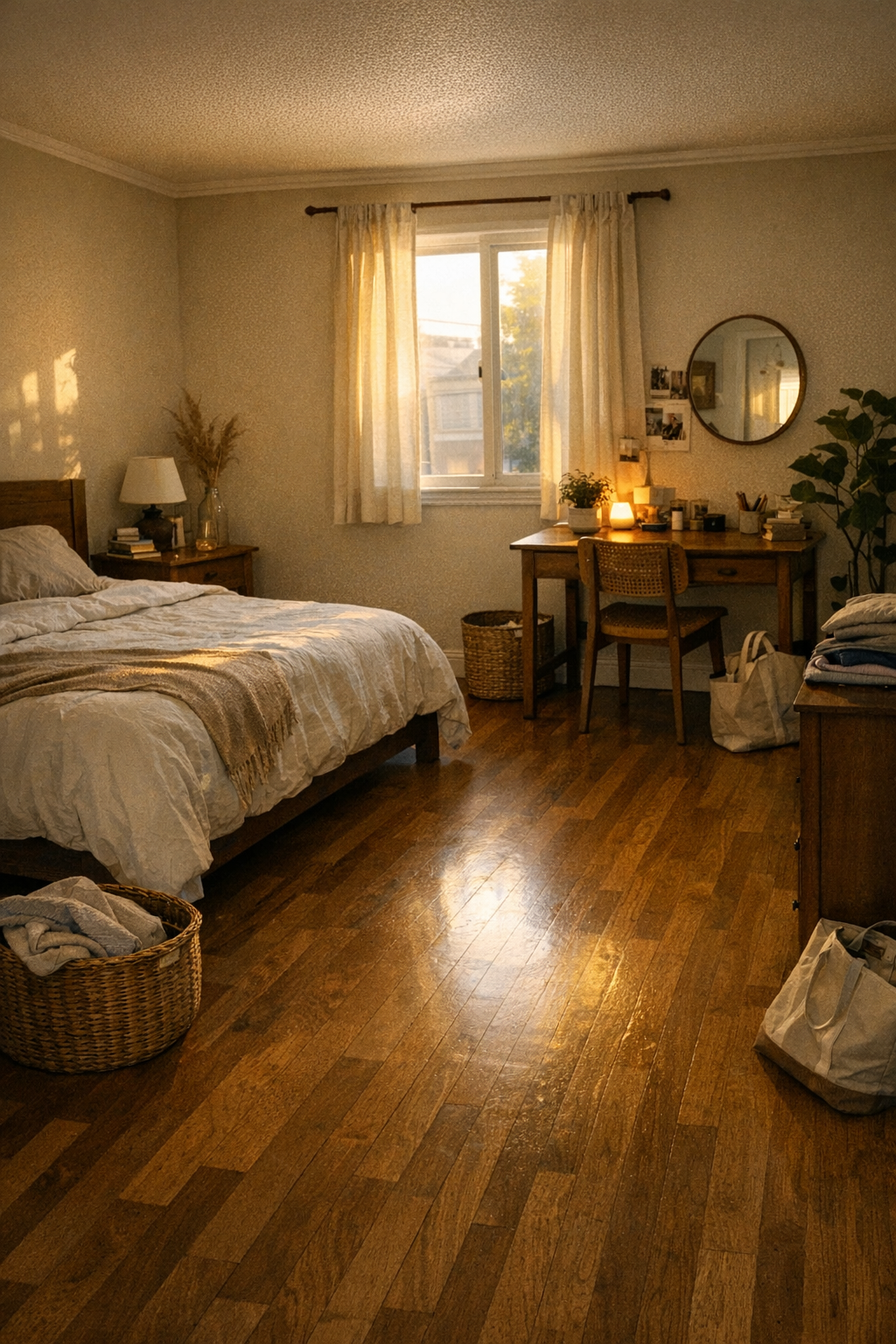
As dawn peeks softly over the horizon, the bedroom greets the day with an almost serene stillness. Early morning light filters delicately through the window, casting gentle shadows across the carpet and tracing faint lines across the side of the slim cabinet. In this quiet moment, the room seems untouched—a pair of shoes neatly paired by the door, socks folded in rare harmony, and a small return bin catching streaks of golden sunshine from the open hallway.
Beyond the bedroom, the distant hum of a kettle begins in the kitchen, and the refrigerator emits a faint sigh, offering a comforting sense of home settling in. Running my hand across the cabinet’s surface reveals a subtle layer of dust, a quiet reminder of time’s passage. I pause here, absorbing the peacefulness before the inevitable stir of activity pulses through the space.
When Order Meets Everyday Life: The Midday Morph
Come midday, the tidy bedroom yields to the dynamics of daily living. Laundry that stubbornly refuses to dry collapses over a chair, its casual drape resembling an accidental sculpture. The corner shelf brims with a mixed collection: novels sit beside garden catalogs and the odd forgotten bill. A damp towel leans against the bathroom’s linen shelf, releasing a sharp soapy aroma into the hallway.
The modular organizer’s bottom drawer transforms into a catch-all. A typical reach for headphones surfaces gardening gloves speckled with soil, a jar label peeling at the edges, and an occasional stray item lost in the shuffle. Surprisingly, shoes migrate into the pathway between dresser and bed, and a laundry bottle left uncapped leaves a subtle streak of soap on the under-bed storage container. Nudging it closed with a gentle touch, the room responds with a soft thud, reaffirming its quiet resilience.
Mess as a Living System
The space blurs between chaos and comfort during this part of the day. A half-finished mug sits precariously on a bathroom shelf, inviting cleanup; meanwhile, a salad spinner inexplicably makes an appearance on the sideboard, rattling faintly with plastic whispers. Pantry shelves bulge, stacked thick with paper goods teetering on the edge, ready to tumble should anyone reach for yesterday’s cereal box carelessly.
Outside the window, garden gloves hang limp on their hook, while pruning shears rest on utility shelves, left as if paused mid-task. In the distance, garage door hinges groan in their metallic symphony, and the screen door shivers softly in the advancing afternoon breeze.
Understanding Clutter’s Quiet Momentum
There’s an old observation that clutter behaves much like wildlife—waiting for just the right opening to move in. Even a single bottle left out of place can tip the balance. Throughout the afternoon, small impacts accumulate: missing socks—those stealthy agents of disorder—lurk unnoticed, while the distinctive clatter of a water glass touched off a tray offers an unexpected wake-up call.
Tripping over a watering can or negotiating around a misplaced dustpan becomes part of the daily navigation through the space. The rolling cart innocently parks itself in doorways, wheels askew, becoming both obstacle and fixture in the room’s evolving layout.
Practical Tip: Strategically Place Frequently Used Items
One way to mitigate this creeping clutter is to identify frequently used items and create dedicated stations for them just outside major traffic paths. For example, relocate the watering can to a nearby garden nook to prevent daily obstacles, or assign the rolling cart a consistent “parking spot” away from doorways. These subtle adjustments help maintain flow without sacrificing access or functionality.
Late Afternoon: The Room’s Quiet Renewal
As light shifts towards evening, the bedroom settles into a quieter, more purposeful pace. Sunlight edges along drawer units and under benches, spotlighting the room’s contours. Opening an old hope chest—a stubbornly sticky hinge reminding me of humid spells—reveals a tangled mess of extension cords and past ambitions. The broom, rescued from obscurity behind the closet, joins forces with the dustpan, sweeping away layers that smell faintly of soil and aged linens.
The gentle clatter of a pegboard against the wall signals the restoration of order as hooks fall snugly back into place. The modular organizer surrenders a veteran packet of seeds from last spring before closing tightly around a mislaid charging cable. Cupboards cycle open and drawers shift, enough to gift the room a renewed sense of balance and clarity.
Refresh Tip: Take a Moment to Reframe Your Space
When the day’s clutter feels overwhelming, pause for a moment and visualize your space as a blank canvas. This mental refresh can shift your perspective from frustration to opportunity. Imagine how each item feels in its spot and allow yourself to prioritize tasks by small, achievable steps. This approach fosters calm and encourages mindful tidying, turning restoration into an accessible routine.
Little victories accumulate as handles are wiped and baskets realigned along the bookcase. The rolling cart concedes, docked correctly for the first time all week—an emblem of the day’s quiet triumphs.
Evening Reset: Finding Comfort in Balance
Dusk softens the bedroom, wrapping it in a gentle embrace. Gloves slip back onto their hooks, soft from use. The last load of laundry finds its place on the storage bench, towels folded with a satisfying precision as the refrigerator hum resumes its steady cadence. A lone cup, carefully placed near the modular garden bed section, remains patiently upright—no spills tonight.
Pruning shears return to their utility rack as the slim bathroom cabinet closes with a reassuring click. The house exhales softly as dust settles, revealing clear pathways from the linen shelf to the window. The wood floor catches the fading daylight, its grain rich with the day’s echoes.
When night falls fully, the quiet takes on a new character. No shoes clutter the floor. No overflowing shelves threaten. Only the low, steady hum of ventilation and the soft slide of the underbed drawer closing punctuate the stillness. These moments of calm are punctuated by familiar rituals—the click of sideboard doors, footsteps along the hallway, the screen door sealing with a subtle shift in the air.
Practical Tip: Create a Nightly Wind-Down Routine
Incorporating a simple nightly reset routine—such as returning items to their places, closing cabinets gently, and clearing walking paths—can significantly enhance the sense of tranquility when you’re ready to rest. This consistent ritual primes both the space and mind for a restful night.
One small change that proved particularly effective was repositioning the portable storage unit just outside the main walking path. Not banishing it, but nudging it slightly to let the room breathe and feel larger without sacrificing utility. It’s a subtle shift with a surprisingly big impact.
Creating Sustainable Balance with Trusted Systems
Maintaining a balanced, livable bedroom isn’t about perfection—it’s about establishing systems that adapt to the ebb and flow of daily life. The combination of sturdy furniture pieces, intuitive storage solutions, and deliberate placement of everyday objects forms the backbone of this harmony.
Each day may bring its little spills and scattered items, but with these systems in place, the room can reclaim order without losing warmth or character. This balance offers not just a cleaner space, but also a mental reset that supports rest and rejuvenation.
As we all navigate the realities of living spaces that are, by nature, dynamic and evolving, accepting imperfection while embracing intentionality can make all the difference. The bedroom becomes more than just a place to sleep—it becomes a space that welcomes both life’s messiness and its moments of quiet clarity.