
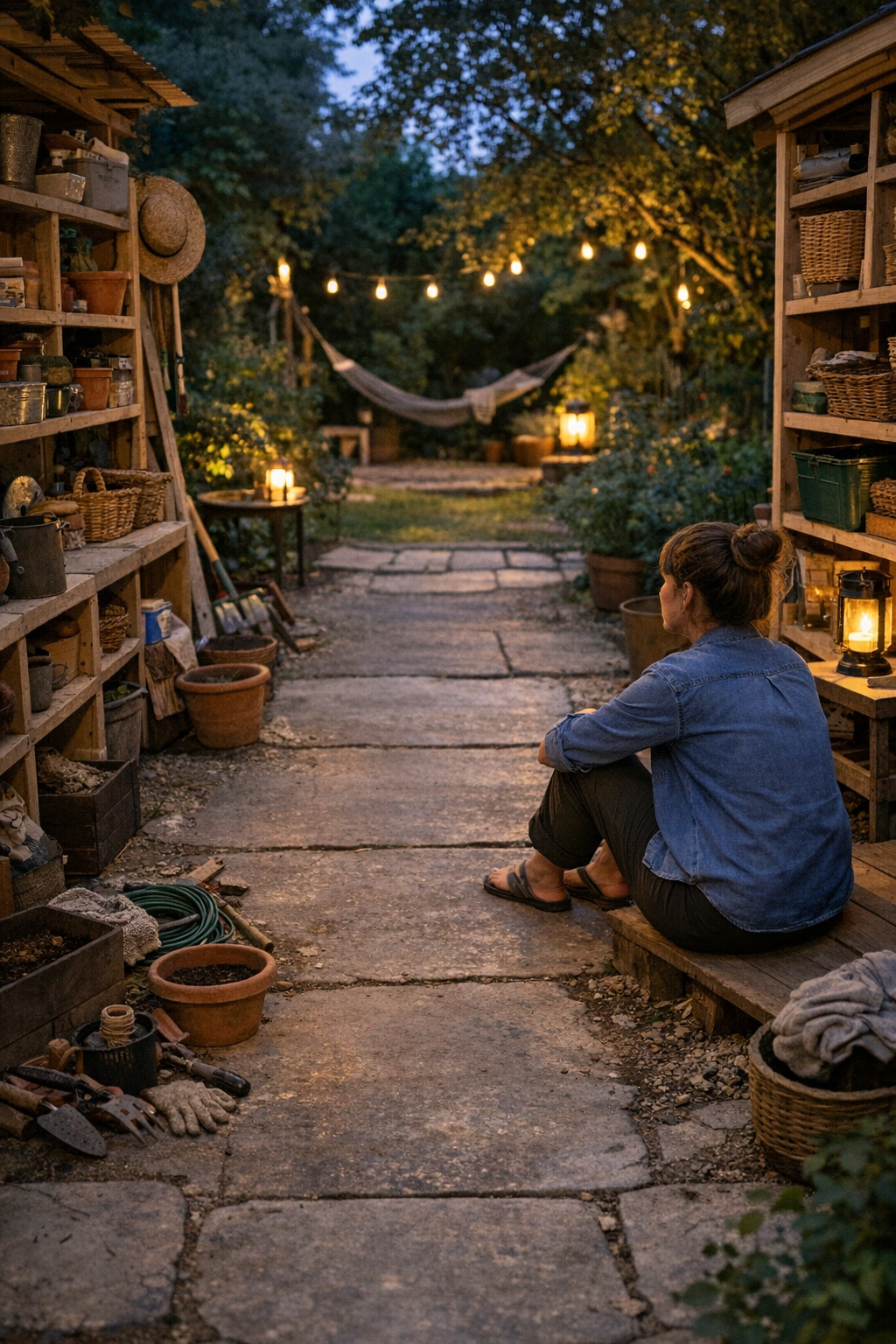
Early morning at home unfolds gently at the edge of the driveway, where the cool air seeps through my socks and carries the scent of damp earth and the memory of rain. The sun, just peeking under the roofline, softly illuminates the shadowed yard, highlighting a row of well-used hooks holding gloves that dry in a neat line. I quietly open the screen door, stepping out onto the chilly flagstones, listening to the gentle clang of a hose nozzle against the bricks. From an open window nearby, the faint hum of a refrigerator reminds me of warmth amidst the stillness. A half-used soil bag reclines near the garden bed, a subtle sign of yesterday’s work. For a moment, standing in the fresh morning light, I hope today the watering cans and tools won’t multiply yet again.
As the day progresses toward noon, a subtle restlessness takes hold. Our dog paws at an abandoned cardboard box, crossed inadvertently into my usual path between kitchen and garden. The return bin wobbles, overloaded with unmatched items: a single boot, two spades, gloves separated from their partners. Water from the morning’s quick watering sessions seeps along the flagstones, tracing dark lines that creep under the gate and blend with a perfect mud crescent left by a boot heel. Rolling up the hose along its rail, I listen to the quiet scrape of rubber gliding against wood, grounding the moment. I’m struck by how everything—shoes, soil, even best intentions—seems drawn earthward when space feels tight.
Managing Your Garden Space with Practicality and Ease
In a compact garden, every inch of space counts; paths narrow, tools pile, and garden beds compete with storage needs. The modular garden bed system near the juniper stands half-assembled, tools arrayed on the edge like guests unsure when the meal will begin. Nearby, a shelf crammed with seed packets and weathered labels promises order but feels more like a starting point than an achievement. This quiet tug-of-war between organization and nature’s demands is the heart of efficient gardening: negotiating with the ground itself.
Tools inevitably gather where they’re most useful—the watering cans cluster, brooms teeter, gloves lose their partners. Moving a single watering can often sets off a slow cascade of shifting items, like a muted domino effect painted in garden greens and earthy browns. This ebb and flow isn’t a problem, but a rhythm inviting flexibility and occasional patience.
Actionable Tip: Create Dedicated Zones for Garden Tools
To manage clutter and optimize your garden workflow, designate specific spots for each category of tools—watering, pruning, digging, and so on—near their points of use. A simple wall rail for hanging gloves and shears, a corner shelf for seed packets, and easily accessible bins for bulky items can keep everything visible and easy to find. By keeping tools within reach and in their rightful zones, you reduce the risk of creating bottle-necks or tripping hazards, especially on narrow paths.
Late afternoon brings a moment of calm. I decide to roll up the worn doormat before repotting, easing the process of moving the drop tray without tripping or creating conflict in the small patio space. For a short while, the patio breathes, its veined stones and sun-dappled patches gleaming in the gentle breeze. This pause isn’t about perfection—it’s relief and a quiet joke with the garden, a breath of openness before the inevitable stir of wind sends twine tags fluttering and birds scattering overhead.
Finding Refreshment in Your Garden Routine
Gardening isn’t just a task or a hobby; it’s a living practice that invites us to refresh not only our space but also our mindset. When you feel overwhelmed by clutter or the constant shuffle of tools and pots, try shifting your perspective. Take a step back and give yourself permission to leave a little mess—it often marks the process that fuels growth.
Refresh Tip: Embrace Imperfection as Part of the Garden’s Story
Rather than aiming for flawless order, focus on creating a comfortable flow that works with the space and your routine. Accept that tools may not be perfectly lined up every day, and surfaces might bear fingerprints of soil and water. By welcoming imperfection, you open space for creativity and reduce stress, turning your gardening corner into a sanctuary instead of a source of frustration.
As evening settles in, I gather the scattered tools, wiping pruner handles with a worn shirt and stacking flowerpots near the cabinet. The wall rack creaks softly as I straighten the shovel on its hook. There’s no grand final tidy—just the gradual return of things to their places, not perfect, but good enough for now. The broom’s bristles whisper over flagstones, pushing loose mulch aside as I sweep the path with a mindful hand.
A cool dusk breeze raises goosebumps, and the fading light catches the rolling cart, now reduced to a shadow beside the garden bed. Closing the cabinet door with a gentle click, I savor the quiet satisfaction of a day’s work settling into stillness. The yard fades to moonlit silence, accompanied only by the soft drip of the hose and distant frog calls. The air tastes faintly of cut grass and the crispness of approaching night.
Ending Your Garden Day with Calm and Order
Before bed, I check the outdoor lamp and glance along the flagstones—mostly clear now, with shoes lined neatly, gloves drying tidily on their rails. The midday clutter has melted away, leaving footprints and smooth soil as subtle records of the day’s rhythm. Perfection is not the goal; rather, it is the gentle pattern of things mostly in their right place that provides comfort and ease.
This steady, familiar routine reminds me why we garden: not just for blooms or harvests, but for the quiet moments of calm that come with putting one tool away at a time, reclaiming small patches of open ground, and breathing easier in spaces made thoughtfully. When your garden is a little snug, a little busy, remember that sometimes the best order is simply enough room to move freely. It’s the stretch of walkway you don’t have to rethink with every step that becomes the real luxury.
Next time you find yourself tangled in hoses or juggling gloves on wall rails, take heart that these small acts carve out their own kind of breathing space—an invitation to slow down and reconnect with the rhythm of your garden and your day.