
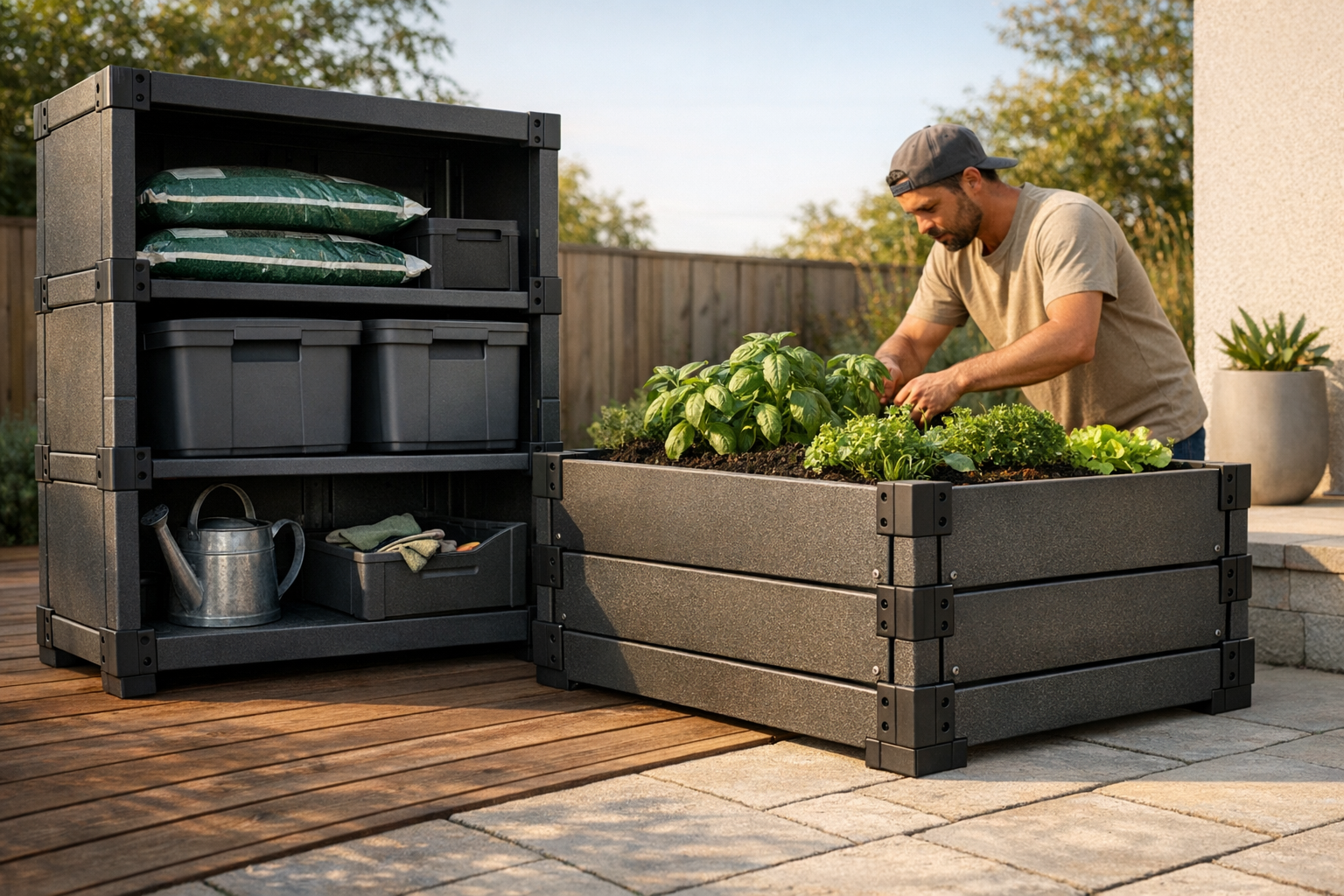
First light breaks softly across the edge of the yard, and the dampness left by last night’s wind still clings to the grass. Stepping barefoot onto the cool concrete, I feel the subtle reward of yesterday’s work in clearing the garage floor. The familiar creak of the garage door mingles with the morning’s quiet—a hose loosely coiled beside the wall rail, still dotted with lingering drops; a pair of muddy gloves collapsed on the corner shelf, their fingers sagging in defeat. The openness of the floor catches my attention most of all—finally, a wide rectangle free of clutter where nothing waits to catch a foot. The air carries the earthy scent of fresh soil mingled with last night’s rain.
For years, whenever I struggled to find tools or containers, my go-to fix was to buy more bins. Plastic boxes, neatly labeled, some stackable, designed to hide and organize everything. For a short while, it worked. Pruners disappeared into a blue abyss, dustpans re-emerged just as hope faded, and bags of soil proliferated behind closed doors. Despite the labels and stacks, the clutter returned. I struggled not only to find things but to remember where they belonged, except for the frustrating chaos near the welcome mat.
Morning Routines in an Ever-Moving Yard
Midmorning, the kettle clicks off in the kitchen, and its faint evaporation of warmth drifts through the cracked screen door. Outside, the return bin overflows—a mix of half-returned tools and half-loaned items from the neighbor that never quite made it back. Nudging the rolling cart into a patch of sun, I retrieve yesterday’s pruners from the drop tray and briefly wonder if I had cleaned them properly last time (I had not). The dog, never the assistant I wish for, sends a broom clattering with a curious nudge at the wall hook, sending dust swirling. Nearby, a watering can has been temporarily stashed beside the garden bed—a kind of signpost marking the narrowing path toward the cabbages.
Out here, routines aren’t strict rituals but gentle negotiations with the day. A breeze flips open a seed packet from the slim cabinet, scattering plans for the day into the air. When a neighbor appears, holding a handful of screws and an expectant look because they’re missing the right bracket, I wipe down the cart handle while watching a leaf settle on the drop tray. I decide not to disturb it. By noon, the yard isn’t tidy in a traditional sense—it’s alive and moving, shaped by habit and necessity.
Rethinking Organization: Simplicity Over Hiding
Chaos in a workspace isn’t a disaster—it’s a frequent guest that slips in unnoticed. Tools drift and return, gloves dry and disappear again, hoses stretch halfway across the yard on their own accord. What’s helped me is simplifying the act of putting things back, rather than hiding them away. Not everything fits into a plastic box anymore; some tools have earned their own hooks, corners, or spots near the steps—visible and easy to reach. That open space—a clear floor with a defined path—marks a real improvement, a sign I’m learning to clear rather than just store.
Refresh Tip: Embrace the Habit of Visible Storage
Sometimes the best organization isn’t about concealment but visibility. Giving each item a designated, easily accessible place—whether it’s a rail, hook, or corner—helps retrain your brain to return items effortlessly. Try setting a ‘return zone’ for every category of tools or garden supplies. Over time, these visual cues become second nature, reducing the energy spent searching or mentally sorting. You’ll find that this subtle shift helps maintain a sense of calm, even when the busy rhythms of yard work swirl all around.
Closing the Loop by Late Afternoon
As the afternoon wanes, the soft wind presses gently against the screen door, blending with the distant, steady hum of the refrigerator inside. Clean pruners wait patiently on the drop tray, soil bags lean upright by the modular garden bed, and the hose finally hangs from a sturdy rail. The old wall rack gives a weary creak as I gently slide the broom back onto its hook and listen to the dustpan scrape into place on its bracket. The watering can’s recurring habit of hiding behind the mobile chest is once again caught in motion—I gently return it to the wall hook, fully aware it may not stay long.
There’s a quiet humor in reclaiming small patches of calm from the naturally wild flow of a lived-in yard. The way the latch clicks a bit louder on humid days; how a stubborn soil bag finally stands upright when no one’s watching; the slow back-and-forth shuffle of tools finding their homes among the usable clutter—all reminders that a workspace is dynamic, not static.
Evening Reflections: Progress Over Perfection
As evening blankets the patio in golden light, the faintest rattling sound whispers from somewhere inside the wall. Pulling on the gloves one last time, I pair them neatly on the corner shelf and hesitate just a moment before setting the watering can on the drop tray. The rolling cart wheels quietly back to its usual nook without fuss. Beneath the ticking refrigerator and a soft settling of the yard gate, the space relaxes, a physical testament to the small victories of a day well managed.
Looking through the window, I see a quiet patchwork of order. The hose hangs on its rail, pruners are accounted for, and the porchlight barely touches a speck of clutter. The garage itself breathes easier, less burdened by stray tools or scattered supplies. I’ve found that my patience grows in direct proportion to how clear the floor remains—not just stored, but cleared. Isn’t that the real goal?
Tomorrow, there’ll be more to do, more tools to manage, and new pockets of disorder to challenge. But these small moments—the returned glove, the dependable watering can on its hook, the stable corner shelf—become the thread that ties each day’s rhythm into the next.
If you’re facing similar ups and downs with your outdoor spaces, start by carving out simple, accessible places for your tools and supplies. Embrace the visible; prioritize open floor space. Each small shift takes you closer to a yard that feels less like an endless fight against clutter and more like a calm, living workspace.