
Early mornings in the garden have a unique rhythm. Barefoot on uneven grass, the day begins quietly, accompanied by the clink of a kettlebell hitting an old garden cart and the determined sniffing of a dog standing sentinel through fence slats. The lawn may be patchy or mottled with damp spots, but the soft light at dawn transforms the space, making it stretch beyond its usual boundaries.
Stepping carefully along the garden path, you might find a hose coiled beneath a narrow bench like a lazy, green river caught mid-flow. Nudging it aside gently can prevent unwanted tangles, and a quick glance reveals the subtle signs of life—clover pushing up softly between pavers, the glimmer of dew on leaves. These small details create a soundtrack to morning chores: the clatter of last night’s gardening tools being hung up, the gentle scrape of cabinet doors closing.
Creating Boundaries: The Power of Defined Spaces
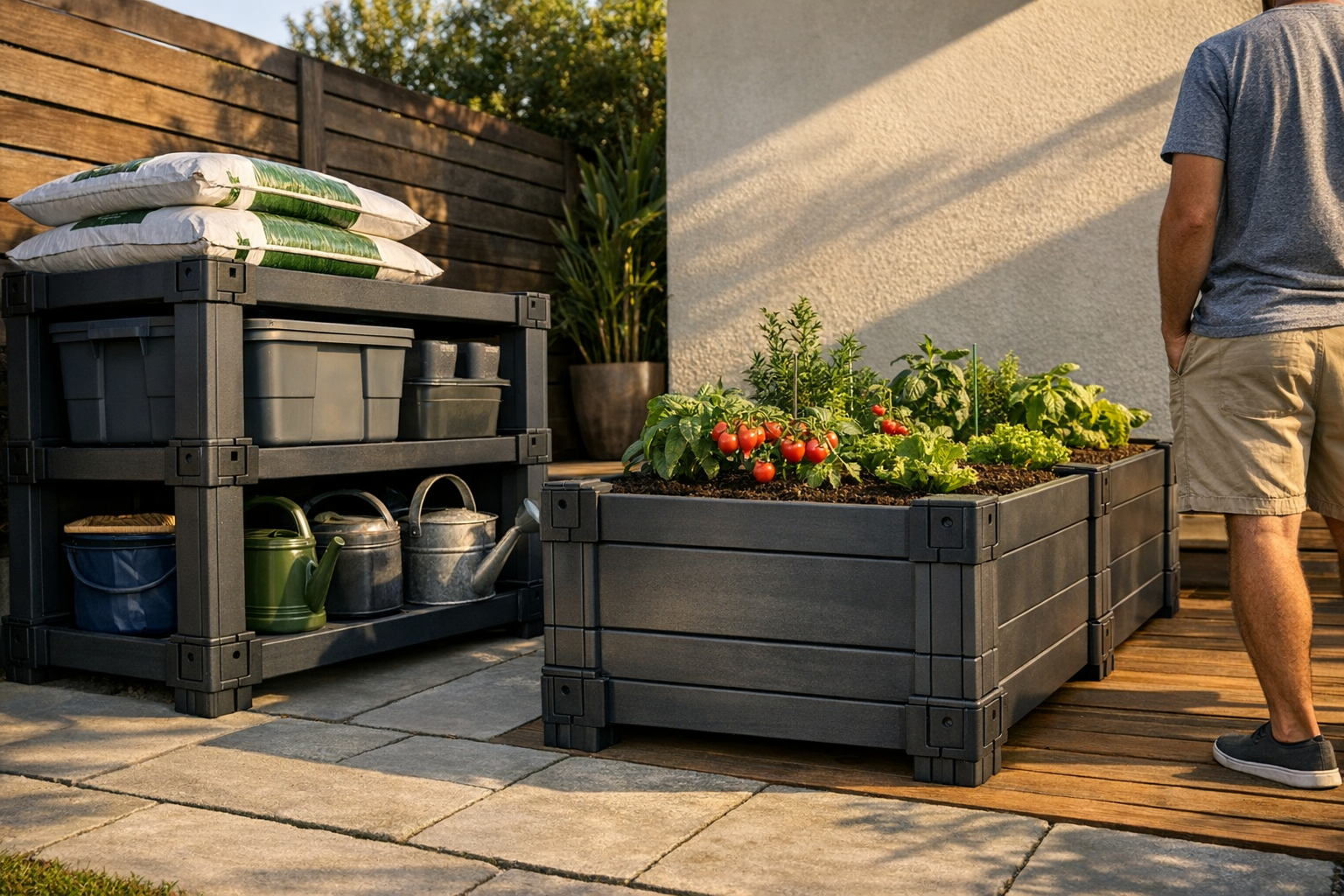
One of the most effective ways to tame outdoor clutter is to design clear boundaries for storage and working areas. Consider the small stretch along your fence or under an overgrown shrub. Installing modular storage units here can provide a snug home for gardening pots, tools, or other bits and pieces, helping prevent lost gloves or misplaced pruners from playing hide-and-seek.
Using compact, stackable containers or simple shelves creates visual order and physical boundaries. This strategy not only helps keep tools off ongoing walkways but also reduces the frustration of stepping over or around forgotten objects. Over time, these designated zones become intuitive, helping everyone who uses the space know just where to return each item.
Actionable Tip: Incorporate Vertical Space
When floor space is limited, take advantage of vertical storage. Installing hooks, brackets, or narrow shelves along fences or walls maximizes space without encroaching on garden beds or walking paths. Hang frequently used tools like trowels, gloves, or garden shears so they’re always within easy reach, but off the ground.
Observing the Flow: How Boundaries Improve Movement
Clear boundaries do more than create neatness; they improve the natural flow of movement through your garden. Imagine being able to walk from gate to back door without stubbing your toe on a watering can or catching a broom handle on your ankle. This smoother navigation reduces frustration and increases the pleasure of spending time outdoors.
Organizing your yard with intentional edges also allows the central garden space to feel more open and inviting. Rather than a chaotic scatter of tools and pots, the garden becomes a stage where planting and planting maintenance can take center stage without interference from clutter.
Maintaining Order: The Importance of a Catch-All Spot
Despite best efforts, not every garden tool finds its way immediately back to its exact place. Having a small, accessible “catch-all” spot—a slim storage cabinet or a shallow bin tucked near the shed—helps corral wayward items. This area acts as a temporary home for single gloves, damp trowels, or even the occasional stray toy dog, reducing the spread of clutter without demanding immediate perfection.
This subtle shift in organizing philosophy, from strict order to a more forgiving system, often leads to better long-term results. Gardeners tend to return items more consistently when the “put back” spot is clear and easy to access. It also allows for brief lapses without the entire yard feeling out of control.
Refresh Tip: Rotate and Reassess Regularly
Periodically stepping back to assess your outdoor storage can revitalize your space. Rotate seasonal tools out of sight when they’re not in use, tidy the catch-all area, and adjust boundaries if growth or needs have shifted. This gentle reevaluation prevents piles from creeping back and keeps your setup aligned with how you actually work in the yard.
Evening Rituals: Settling the Yard for the Night
As evening falls, the garden’s mood shifts. Tools are rinsed, gloves dried, and everything finds its place—whether that’s a hook on the fence, a caddy on a metal bracket, or a storage spot under a bench. The simple act of walking through the yard and noticing that no obstacles lie in the way creates a rare moment of satisfaction.
At night, the quiet is profound. With no clutter to trip over, the garden feels bigger and calmer. Even the local cat seems to appreciate the order, silently observing the flutter of moths near garden beds in the fading light.
Putting It All Together: Practical Strategies for a Tidy Yard
- Designate clear boundaries: Use modular storage, shelves, or benches as defined spaces for tools and pots.
- Utilize vertical storage: Hooks and wall-mounted racks reduce ground clutter and improve accessibility.
- Create a “catch-all” area: Allow for temporary containment of misplaces items to maintain flow.
- Establish daily or weekly tidy routines: A quick sweep and tool check reduce buildup and encourage consistent habits.
- Refresh storage zones seasonally: Rotate tools and reassess layouts to adapt to changing needs.
When thoughtfully arranged, a yard can transform from a scatter of belongings into a harmonious extension of your home—a place where organization supports your garden’s beauty rather than competes with it. This balance helps you enjoy the space fully, whether you’re harvesting vegetables, pruning roses, or simply savoring the quiet moments that a tidy outdoor sanctuary offers.
For more inspiration on effective outdoor organization, consider exploring collections of modular garden storage and tools designed to fit the natural flow of your garden space.