
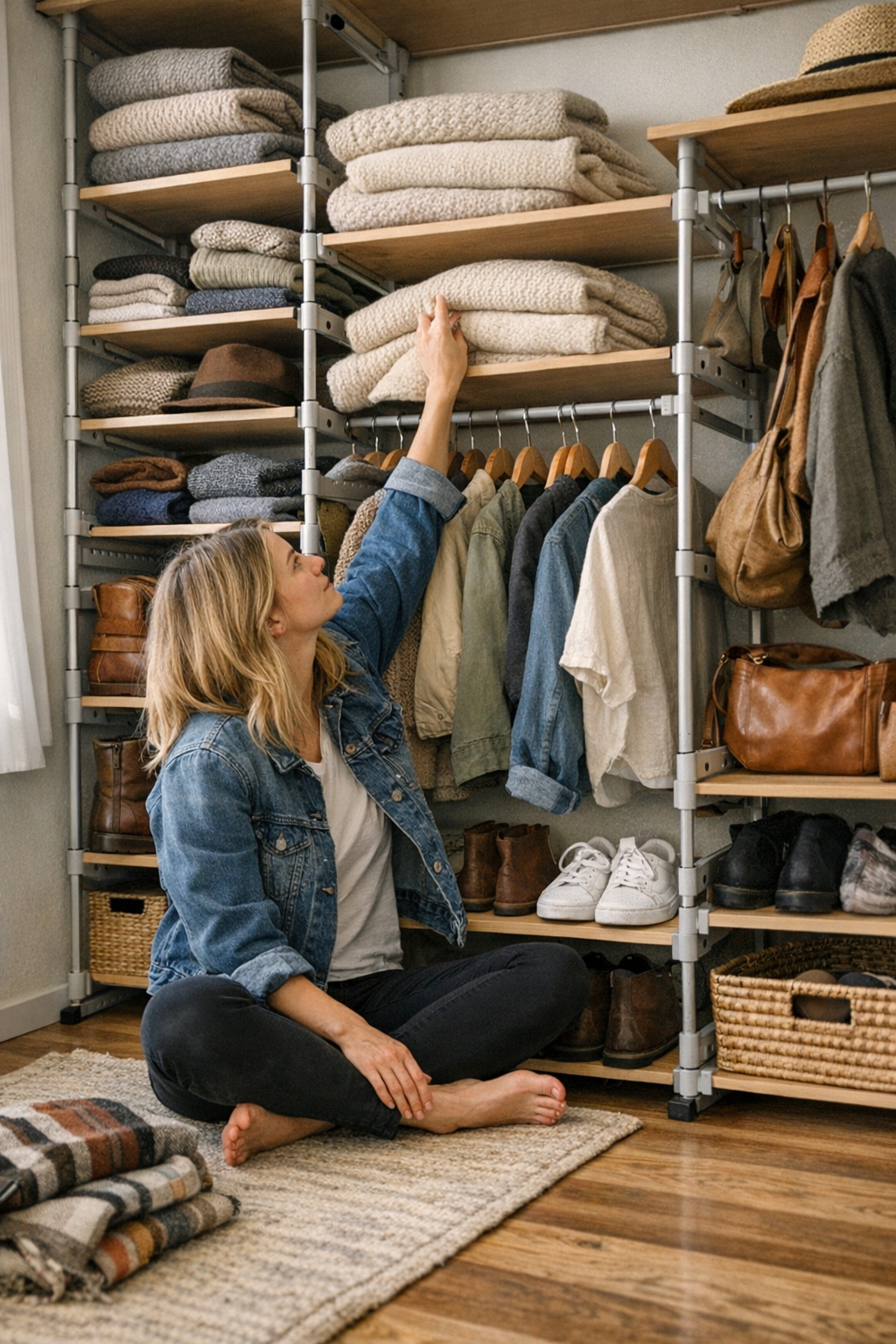
The Subtle Art of Closet Order
Every home has spaces that breathe quietly alongside us, waking slowly with the rhythm of daily life. Closets, often overlooked, hold an intimate choreography of shoes nudged into place, scarves rested delicately, and coats hung just right. These unassuming spaces tell stories of routine, adaptation, and the understated victories of keeping order amid everyday chaos.
Signs of wear greet you in a closet more than just the clothes. The floor tilts slightly, the shelf creaks softly, and the door stretches with a gentle groan—a reminder of years spent holding the weight of countless garments and accessories. Shoes, nestled side by side in familiar wedges, stake their claim just inside the closet door. This is not the grand walk-in closet of dreams but a modest, measured space arranged with intention: shoes here, scarves there, coats in their corners.
Finding Functional Boundaries
Closet organization often begins with the desire – or the need – for more storage solutions. However, piling new bins or baskets without a real system can result in clutter that’s no easier to manage. The pivotal realization is that boundaries, even if invisible, provide the framework for lasting order. Establishing specific zones for shoes, hats, scarves, and coats prevents accidental invasions and keeps each item accessible without overlap.
Take a moment to observe how your closet currently functions. Are boots tumbling over hats? Do gloves end up wedged between sweaters? By gently nudging items into distinct places and maintaining consistent habits, you turn the closet into a space of calm, not chaos. For instance, designate the lowest shelf for shoes and boots to ensure they stay off the floor and don’t interfere with hanging clothes. Use hooks or small baskets for scarves and hats, and keep laundry baskets in clear view but out of the way.
Daily Habits That Sustain Order
One of the biggest challenges in closet upkeep is the daily ebb and flow of life—offloading coats hurriedly, casting off shoes after a long day, temporary drop zones for mail or bags. The key to sustained organization lies in small, habitual resets: placing your coat back on its hanger right after coming inside, sliding shoes neatly into their slots, or hanging scarves carefully after use.
These actions become silent rituals that keep the closet balanced. The satisfaction of hearing a drawer snap closed or feeling the smooth slide of a shelf reinforces the habit and deepens your connection to the space. Over time, the closet begins to feel like a partner in daily living rather than an obstacle.
Managing Storage Without Overload
It’s tempting to believe that buying more bins or investing in nested baskets will solve storage woes. However, too many containers often lead to complications—more lids to manage, more corners filled with forgotten items, and a constant battle to keep track. Instead, aim for simplicity and functionality.
Choose storage solutions that suit the closet’s dimensions and your lifestyle. For example, a single sturdy laundry basket placed near the door can handle towels and light laundry with ease, reducing clutter without overwhelming spaces. Transparent containers or open baskets provide visibility, reminding you to check and reset their contents regularly.
Refresh Tip: Reevaluating Your System Seasonally
Periodically stepping back to reassess your closet system can breathe new energy into the space and your habits. Every few months, take inventory: which items are used regularly, which have outstayed their welcome, and which zones could be redefined for efficiency? Seasonal rotation not only frees space but also aligns your closet with your current needs.
For example, as temperatures change, consider moving heavy winter coats to a less accessible spot and bring lighter jackets forward. This physical shift nudges you to reassess the layout and ensures your boundaries remain adaptive and purposeful.
Embracing the Everyday Details
The small objects you encounter throughout the day—drip-drying umbrellas, mail piled on a tray, keys rattling into a bowl—add texture and life to your closet’s story. While they may seem like distractions, integrated thoughtfully, they contribute to the room’s function and flow. Assign dedicated places for these everyday carry-alls to avoid overflow and make retrieval effortless.
Perhaps a shallow wall-mounted tray near the door can corral incoming mail, while a decorative bowl captures keys and loose change. Keeping treasured but out-of-place items, like a pinecone you found on a walk, in a specific spot prevents their gradual encroachment on functional zones.
The Quiet Triumph of a Well-Kept Closet
At the end of the day, the true reward of a thoughtfully managed closet is a sense of calm and readiness. Closed doors conceal a quietly maintained peace—a space where everything has a home and unspoken rules maintain harmony. These unglamorous acts of care and discipline are the backbone of a home’s order. Through steady, intentional effort, your closet can become the anchor for a more organized, manageable routine.
Practical Tips for Sustaining Your Closet’s Order
- Define Zones: Use shelves, hooks, and baskets to create segments within your closet, each dedicated to shoes, coats, accessories, or laundry items.
- Daily Reset Rituals: Develop simple habits to return items to their places at the end of the day to prevent pileups.
- Limit Storage Containers: Use only as many baskets or bins as the space comfortably allows to avoid overwhelming the closet.
- Seasonal Evaluation: Regularly reassess and adjust your system based on your current wardrobe and lifestyle changes.
- Incorporate Everyday Items Thoughtfully: Assign homes for things like keys, mail, and umbrellas to keep them accessible but contained.
With patience and care, the sanctuary of your closet becomes not only a storage space but a place of quiet order that supports your daily life. Small gestures and consistent boundaries transform clutter into calm, turning your closet into a steady companion in the rhythm of home.
If you’re looking to explore more strategies for closet organization and design, visiting closet ideas offers a wealth of inspiration for creating spaces that truly serve your needs.