
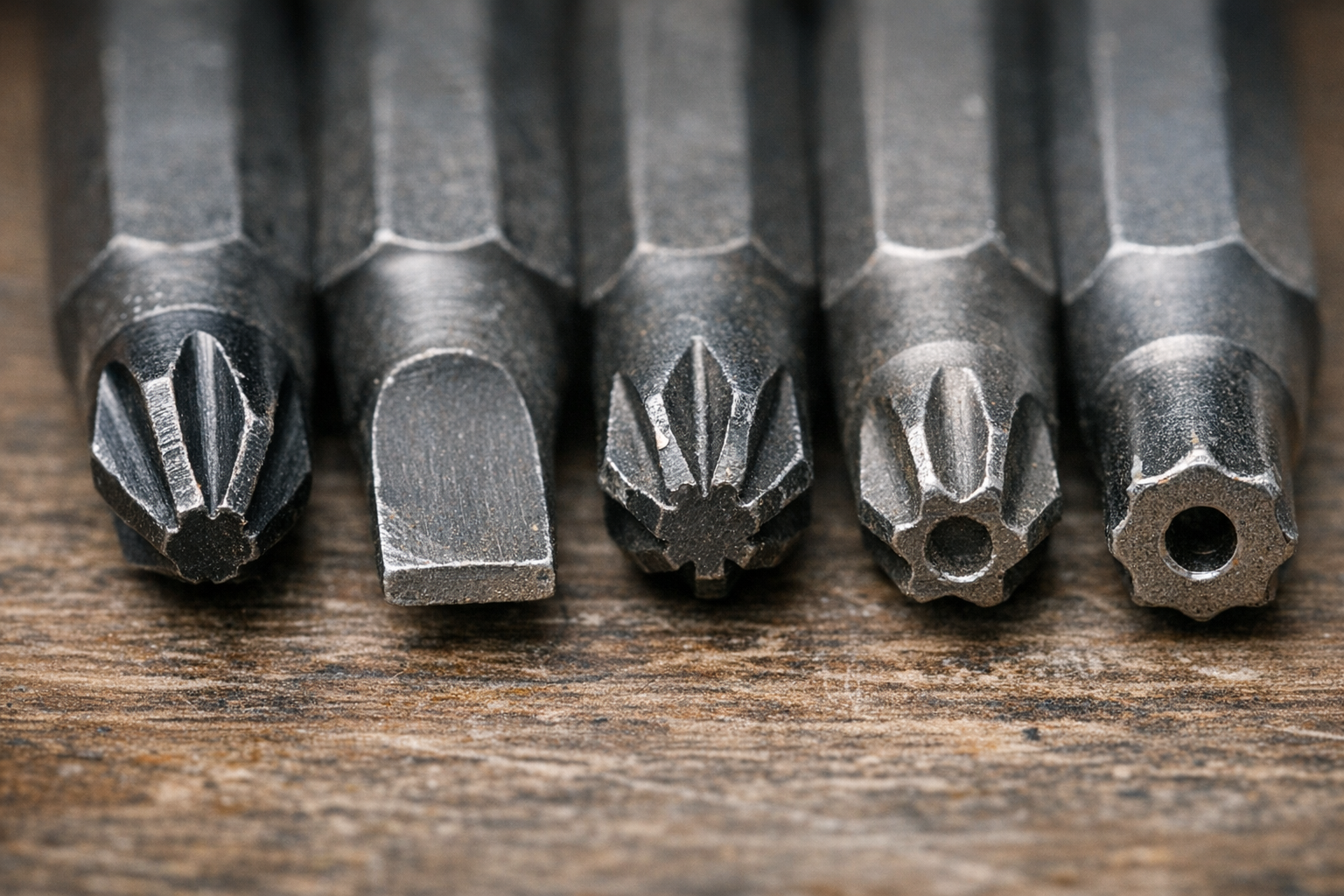
When you reach for your impact driver to tackle a project—be it fixing a deck, tightening fence screws, or securing a detached bracket—you might glance over a box of assorted bits and wonder if it really matters which one you pick. At first glance, most bits look interchangeable, but choosing the wrong one can quickly lead to frustrating issues like stripped screw heads, slipping tips, and wasted effort. Understanding the common impact driver bit types can dramatically improve your efficiency and save you from expensive trips back to the hardware store.
Why Selecting the Right Bit Matters
Even if your impact driver cranks out serious torque, that power doesn’t mean much if the bit isn’t the right fit. The wrong bit can cause cam-outs—where the bit slips out of the screw head—leading to stripped screws, damaged materials, and sore hands. Time lost fixing these mistakes far outweighs the seconds saved by grabbing the wrong bit originally.
Bit design and fit are just as important as the driver’s power. For example, a No. 2 Phillips bit looks similar to a No. 3 Phillips but using them interchangeably is a surefire way to wreck screw heads. Impact drivers deliver anywhere from 1,200 to 1,800 in-lbs of torque, and bits not rated for impact use often twist or break under that stress.
The Classics: Phillips, Slotted, and Pozidriv Bits
Phillips (PH)
Phillips bits, with their iconic cross shape, are the go-to for many general-purpose screws. Their self-centering design works well for fast assembly, keeping things aligned as you drive. However, if you find yourself stripping Phillips screws frequently when using an impact driver, check if your bits are truly impact-rated.
Typical Phillips bits are made from regular S2 steel, which can twist or wear out under repeated heavy impact. Impact-rated bits use special heat treatment and alloy blends to withstand the torque without snapping. For most household wood screws, a No. 2 Phillips impact bit, often coated with black oxide or featuring a torsion zone design, serves well.
Flat / Slotted
The flat blade is the simplest bit shape, fitting screws with a single straight slot. They aren’t ideal for impact drivers because they tend to slip out easily, especially under high torque. Use them carefully—stick to hand driving or a low torque setting (under 1,000 impacts per minute) to avoid damaging the screw slot or bit tip.
Pozidriv (PZ)
Similar in appearance to Phillips but with added ribs between the blades, Pozidriv bits offer superior grip and reduce cam-out. It’s crucial to match Pozidriv screws with Pozidriv bits, as using Phillips on Pozidriv screws will quickly chew away the ribs, ruining the fasteners in moments.
Look closely at the screw head: extra small tick marks between the slots are a giveaway that it’s Pozidriv.
Star Power: Torx and Security Bits
Torx (T)
The six-pointed star shape of Torx bits makes them favorites for heavy-duty applications like decking, automotive work, and structural fastening. Their design spreads torque evenly, letting you apply more force without slipping or damaging the screw head.
Torx sizes are straightforward—T20, T25, T30, etc.—and it’s important to use an exact size match. For deck building, a T25 impact-rated bit about 2 inches long with a magnetic tip is an excellent choice. This setup reduces stripping, especially when driving long structural screws.
If you encounter stuck or rusted screws, switching to a torx bit (always impact-rated) often reduces slips and gives better control, particularly in treated or outdoor wood.
Security Bits
Some Torx screws have a small hole in the center, indicating they require a tamper-resistant bit. While you won’t use these every day, having a security Torx bit can be a lifesaver when dealing with appliances, public fixtures, or specialized hardware.
Square (Robertson), Hex, and Specialty Bit Types
Square (Robertson)
Robertson or square bits are very popular in Canadian construction and gaining ground in the U.S. Their square recess offers excellent grip and resists cam-out more than Phillips or slotted bits. Common field sizes include No. 1 (red), No. 2 (black), and No. 3 (green).
These bits are great for repetitive tasks like subfloor installation or cabinetry because they reduce hand fatigue and bit wear. Key caution: never use a smaller square bit on a larger screw; this quickly rounds both and ruins the fasteners.
Hex (Allen)
Hex bits resemble tiny Allen wrenches and are essential for furniture assembly, set screws, and some door hardware. Sizes range across metric and SAE standards (4mm, 5mm, 6mm, etc.).
A practical tip: magnetic impact bits—not just the bit itself, but with magnetic holders—help keep screws in place for overhead or awkward-angle tasks, making single-handed starts easier, especially on metal or sheetrock work.
Jobsite Organization Tip
Keeping your bits organized saves time and stress. Set aside a dedicated organizer with your most-used bits—like T25 Torx, No. 2 Phillips, and No. 2 Square—so they’re ready for common trades like rough carpentry or framing.
Materials and Design: What Makes a Bit Impact-Rated?
Impact-rated bits are engineered to absorb the repeated hammering action inside impact drivers. Made from hardened steel alloys like enhanced S2 steel and often featuring specialized coatings, they flex under torque instead of snapping. Along with toughness, some bits include torsion zones—twisted sections designed to absorb torque spikes and prolong bit life.
Bit length matters too. Standard 2-inch bits are best for most framing or general work. Longer bits (3 or 6 inches) help reach tight or angled spots but can reduce control and increase bit wobble.
Maintaining Your Bits for Longevity
One overlooked productivity hack is replacing dull or rounded bits immediately. Even if a bit seems to work “well enough,” its worn edges will damage screws faster, making driving harder and risking tool damage. Create a “retired” box for worn bits to avoid accidental reuse.
Regularly clean bits with a magnet or compressed air to remove metal shavings or debris—especially when working with treated or composite woods. This prevents premature wear on the bit tip and keeps your drives smooth.
Refresh Tip: Matching Bits to Screws Saves Time and Reduces Frustration
Before starting any project, spend a moment lining up the bits next to your screws. Confirm the fit visually and physically—an exact match may save you minutes or even an hour of frustration later. This small step is often skipped but pays dividends in keeping work flowing and stress low.
A real-world example: During a subfloor installation, the crew had two types of screws mixed—Phillips and square. Poor organization led to frequent bit switching, delays, and, eventually, someone forcing the wrong bit on a square screw, stripping multiple heads. Arranging bits and screws side-by-side beforehand quickly restored order and kept everyone calmer.
Practical Bit Sets for Common Projects
- Home repairs: Phillips, slotted, and square bits cover the vast majority of tasks.
- Decks and outdoor work: Include Torx bits, especially impact-rated T25s, plus security Torx for tamper-resistant fasteners.
- Furniture assembly and fixtures: Hex bits handle these tasks well.
When in doubt, don’t rush picking a bit. Taking a few extra seconds can prevent igniting a cascade of problems.
Conclusion
The choice of impact driver bit may seem minor but plays a major role in how smoothly every fastening task goes. Using bits that match screw types and sizes, that are impact-rated, and replacing them when worn, keeps your work efficient and reduces frustration. Instead of just grabbing the first bit you find, be deliberate. Your projects—and your hands—will thank you.
If you want to explore a wide array of bits to suit different applications, consider looking through comprehensive collections designed to streamline your tool setup and keep you ready for any fastening challenge.