
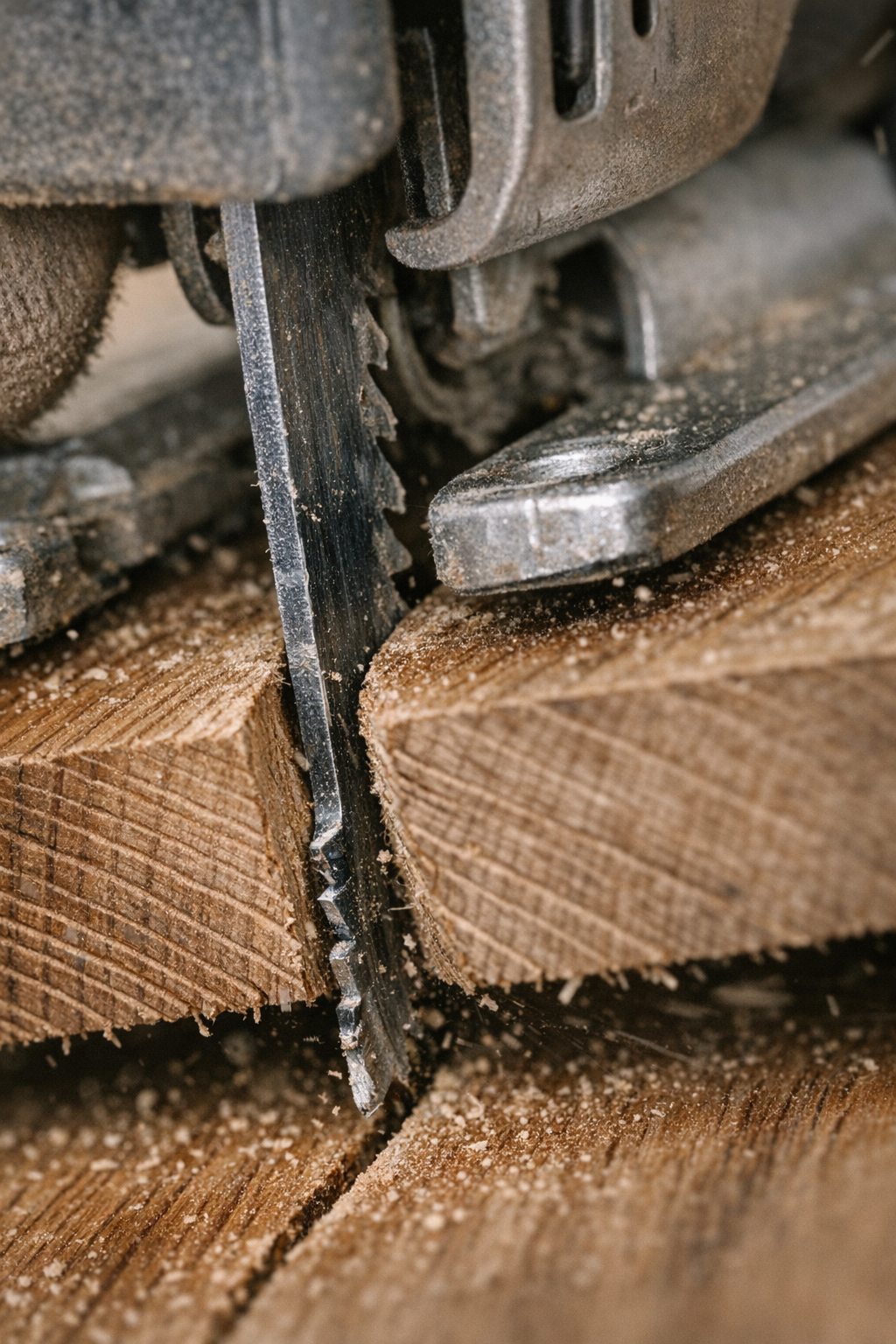
Understanding Blade Deflection in Thick Material Cuts
Cutting thick hardwood or dense plywood with a jigsaw brings a unique kind of satisfaction. Tracing a bold line carefully marked earlier and watching the blade carve through the wood signals craftsmanship in motion. Yet, many users experience the frustration of blade deflection—where the blade wanders off course, curves, pins, or twists, leaving the cut edges rough, beveled, or simply inaccurate.
Blade deflection isn’t a reflection of poor technique alone; it’s an inherent challenge tied to the nature of jigsaw blades and the materials we cut. Unlike other power tools with stiff, short blades, jigsaw blades are thin and long, which makes them prone to bending and twisting under the stresses of cutting thick stock.
What Causes Blade Deflection?
Several factors contribute to this all-too-common problem:
- Blade Geometry: Jigsaw blades are narrower and longer than most saw blades, which makes them flexible under lateral pressure.
- Material Density and Thickness: Thick hardwood creates more resistance and requires greater cutting force, which translates into more side pressure on the blade.
- Friction and Heat: Cutting thick wood generates heat, which can soften the blade slightly and cause it to twist or wander.
- Operator Movement: Leaning, pushing too hard, or steering aggressively can cause the blade to leave its intended line.
For example, when pushing a blade through over 1-1/2 inches of oak, the pressure and leverage on the blade can easily cause it to flex sideways.
Blade Width and Teeth Per Inch (TPI) Matter
Blade width plays a critical role in preventing deflection. Blades narrower than 8mm tend to flex easily, even when labeled “heavy-duty.” For thicker stock, blades 10mm or wider with a kerf of at least 1.2mm provide better stability. Choosing a blade with an appropriate TPI also affects the cut: around 8 TPI works well for hardwood, balancing chip clearance and smoothness.
Tips for Minimizing Blade Deflection
Refine Your Stance and Body Position
One of the most impactful adjustments you can make involves how you position yourself at the workbench. Standing with a wider stance and keeping your arms close to your body helps maintain control and balance. With elbows slightly bent and wrists aligned straight, you reduce unintended twisting forces on the saw.
Try supporting the front shoe (the base of the saw) firmly on the material with your off-hand, and let your guiding hand focus on steady side-to-side control rather than pushing aggressively forward. Rather than wrestling the saw, aim to let its weight provide the forward force while your body movement keeps the blade on track.
Adjust the Orbital Action Setting
Many jigsaws feature adjustable orbital action, which influences how aggressively the blade moves in an elliptical path. For thick, dense material, using a low orbital setting (levels 1 or 2) helps by slicing more cleanly rather than aggressively chewing through the wood. High orbital action can cause the blade to pull along the grain, increasing the chance of wandering off the cut line.
Select the Right Blade for the Job
Blade choice can’t be an afterthought. For thick, dense materials:
- Pick blades labeled as “extra thick” or designed for hardwood. Their greater width resists narrowing and twisting.
- Choose blades with larger, fewer teeth to clear chips more efficiently and decrease kerf pinching.
- Consider using bi-metal or carbide-tipped blades, which feature stiffer spines and increased durability, maintaining straighter cuts under side pressure.
Control Your Cutting Speed and Pressure
It’s tempting to crank up the speed, but in thick materials, slower cuts often result in cleaner lines. Run your jigsaw between 1200–1800 strokes per minute rather than pushing to the maximum speed. Allow the tool’s own weight to feed the blade gently through the wood rather than forcing it with your arms.
When the saw starts vibrating excessively or bogging down, pause briefly to let the blade cool and clear chips. Periodically withdrawing the blade (every 6 to 10 inches cut) helps clear sawdust and maintain blade performance, doubling its service life and preserving your cut quality.
A Practical Refresh Tip: Listen to Your Tool and Wood
Sometimes the difference between a wandering blade and a clean cut is subtle but critical—how attuned you become to feedback during the cut. Pay attention to sounds like squeaking, changes in vibration, or dull “dragging” feelings. These clues tell you when the blade might be overheating or pinching, providing an opportunity to ease off or adjust your technique before deflection occurs.
Taking a moment to reset your position, check the orbital setting, or even swap the blade when you catch these signs can be an effective mental reset that elevates your cutting precision overall.
Avoiding Common Mistakes
- Don’t Overreach: Standing too far from the cut line forces awkward arm positions, increasing side pressure on the blade.
- Don’t Muscule the Saw: Applying excessive forward force leads to blade wandering. Trust the tool’s weight and let it work strategically.
- Don’t Ignore Setup: Clamping your material securely at waist height reduces movement and improves control.
Conclusion: Make Your Stance and Setup Your First Fix
Blade deflection in thick materials isn’t just about blades or tools; more often, it’s about how you interact with your saw. Before blaming dull blades or inadequate equipment, check your stance, body alignment, and support. Set your material to a comfortable working height, plant your feet wide, and use your whole body to guide the saw steadily along the line.
Match your blade type and jigsaw settings to the density and thickness of your material, control your speed, and take breaks to clear chips and cool the blade. Applying these combined strategies will lead to strikingly better cuts with fewer frustrating deflections.