
There’s a familiar sharp hiss as you squeeze the trigger on a pneumatic tool, and a perfectly driven nail slides into the wood. But if you’ve ever relied on air-powered tools for even a few projects, you know there’s a hidden challenge lurking beneath that burst of compressed air: moisture.
Unchecked water vapor in compressed air not only leads to visible puddles under the drain valve, but more dangerously, it causes corrosion inside hoses, damages your tools, and ruins delicate finishes. It took me one ruined paint job and a corroded impact wrench to finally understand just how important managing moisture really is.
Why Moisture Is a Hidden Threat in Air Compressor Lines
Compressing air naturally condenses water vapor. Humidity in the air—no matter how dry it might seem—gets squeezed into your system. When the compressed air cools while passing through hoses, water droplets form and travel downstream, reaching every tool you connect.
What’s the real damage caused by this moisture?
- Rust and corrosion inside tools and tanks: Prolonged exposure to moisture creates corrosion on steel parts inside your tools and compressor tank, leading to pitted ratchets, stuck triggers, and rusted fittings that need frustrating repairs.
- Damage to painted surfaces: When moisture spits from the line during tasks like spray painting, it causes imperfections such as fish-eyes and gritty finishes. These flaws usually require sanding and costly rework.
- Reduced tool performance: Water acts as a barrier or inappropriate lubricant inside pneumatic motors, resulting in weaker impact power or slower cycling in nail guns.
- Premature wear on seals and valves: Moisture deteriorates rubber O-rings and gaskets, leading to leaks and loss of pressure efficiency.
A Personal Wake-Up Call: When My Air Ratchet Clogged With Muddy Water
My realization came unexpectedly. While assembling a steel frame, my trusty air ratchet started sputtering and nearly slipped from my hand. Unscrewing the quick connect, a few drops of brown, muddy water dribbled out. Within days, the inside of the tool was corroded and sluggish.
It was tempting to blame the tool’s age, but a seasoned mechanic told me bluntly: “You let water ride shotgun too long.” That moment led me to adopt better moisture control habits—here’s what truly worked.
Effective Strategies to Prevent Moisture Buildup in Air Lines
1. Drain Your Compressor Tank After Every Use
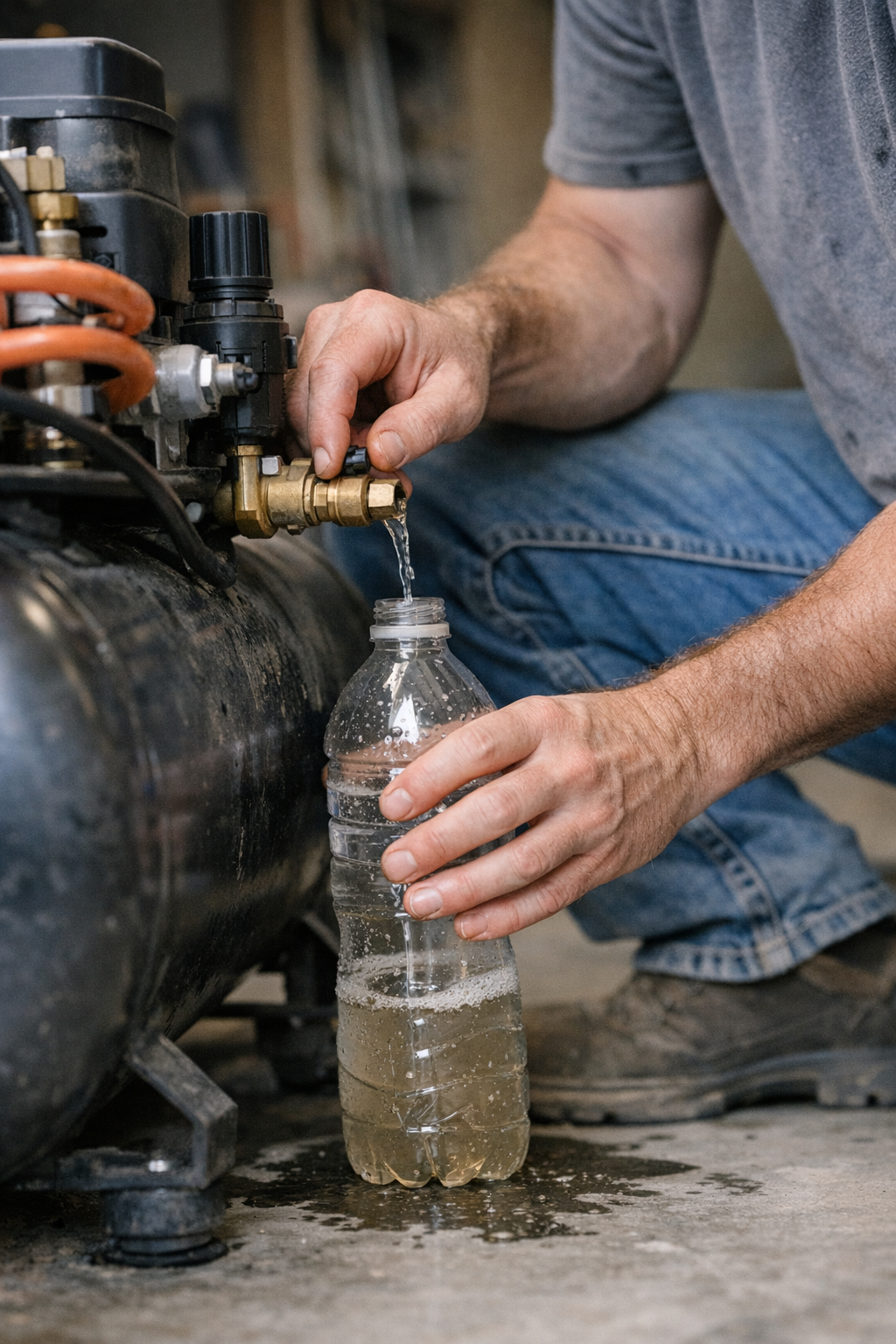
While this seems obvious, it’s often overlooked. I used to drain my tank once a week, assuming that was enough. One humid week changed that—just two days in, water sloshed inside my tank. Now I drain it after every session, no exceptions.
Practical tip: Attach a clear plastic bottle under your drain valve to collect condensation. Seeing real water accumulate is a constant reminder to keep that valve open. It’s easy to ignore a closed valve; it’s impossible to ignore a filling bottle.
If your drain valve sticks or clogs, upgrade to a ball valve or a quick-release drain for smoother maintenance.
2. Install a Water Separator Filter Right at the Compressor Outlet
A simple inline water separator is an inexpensive, effective upgrade. Screwed in directly after your pressure regulator, it traps liquid water before it enters your hoses.
Choose a separator rated for at least 150 PSI, matching your compressor’s output and fittings—usually 1/4″ NPT for workshop compressors producing 4 to 12 CFM. Remember, these separators do collect water and must be emptied regularly; my own needs draining even after short, 20-minute jobs.
3. Keep Your Hose Layout Optimized to Minimize Water Traps
Condensation is encouraged by cool spots; hoses that sag hold water like a reservoir. I stopped letting my air hoses lie flat on the floor. Instead, I loop them with a gentle, consistent slope so any moisture naturally flows back toward the compressor or toward a drain point.
Elevating hoses on wall hooks or racks also helps. Even raising a hose a few feet makes gravity your ally, reducing internal water pooling. Consider adding quick-disconnect couplers every 30–50 feet if you use very long hoses—this lets you clear out water without taking apart the whole system.
4. Add a Secondary Moisture Filter Near Your Tools for Sensitive Jobs
For tasks like spray painting or electronics cleaning, add a mini moisture filter just before your tool. These small inline filters capture residual moisture that bypasses upstream separation. Having one in place saved me from countless ruined finishes.
Note that these fine inline filters often have lower pressure ratings (about 80–125 PSI) and need periodic replacement, usually after 20–40 hours of use in damp environments.
5. Adopt Good Hose Storage Habits to Let Moisture Drain
When you finish your work, disconnect your hose and hang it vertically with both ends open. This allows trapped water to drain naturally. Coiling hoses on the floor with closed ends traps water inside, encouraging corrosion and compromising hose life.
Installing a wall-mounted rack about 4 feet off the ground is a small investment in longevity. Flexible polyurethane hoses are especially forgiving to this practice, but even traditional rubber hoses benefit significantly.
Refreshing Your Approach: Small Habits, Big Impact
Sometimes, a subtle shift in mindset can make all the difference in the workshop. Instead of thinking of moisture control as an occasional or tedious chore, treat it as part of your tool care ritual—just like sharpening blades or oiling moving parts.
Consistent check-ins and maintenance after every job keep problems small or eliminated. Even small visible signs of moisture are indicators to act immediately rather than a reason to delay. This mindset shift transforms maintenance from a burden into a natural part of your workflow, extending the life of your tools and improving every project.
The Results: Reliable Tools and Flawless Finishes
Since making these moisture management habits routine, my air tools run cleaner and last longer. No more sputtering ratchets, no more blotchy paint surfaces. The peace of mind that my pneumatic system delivers dry, dependable air is worth every extra second spent on maintenance.
In Summary
Moisture in compressed air lines is a silent saboteur, causing everything from rust and premature tool failures to poor finish quality and lost productivity. Preventing it doesn’t require complicated gear—just consistent habits:
- Drain your tank after every use.
- Use water separators at the compressor outlet.
- Keep hoses arranged to avoid water traps.
- Add inline filters near sensitive tools.
- Store hoses vertically with open ends to drain liquids.
These simple steps shield your investment and quality outcomes. Start with something easy, like putting a bottle under the drain valve and observing your water output. This awareness is often the turning point in tackling moisture problems before they cost you downtime or expensive repairs.
Adopting these practical moisture prevention tactics will help keep your workshop efficient, your tools reliable, and your projects flawless.