
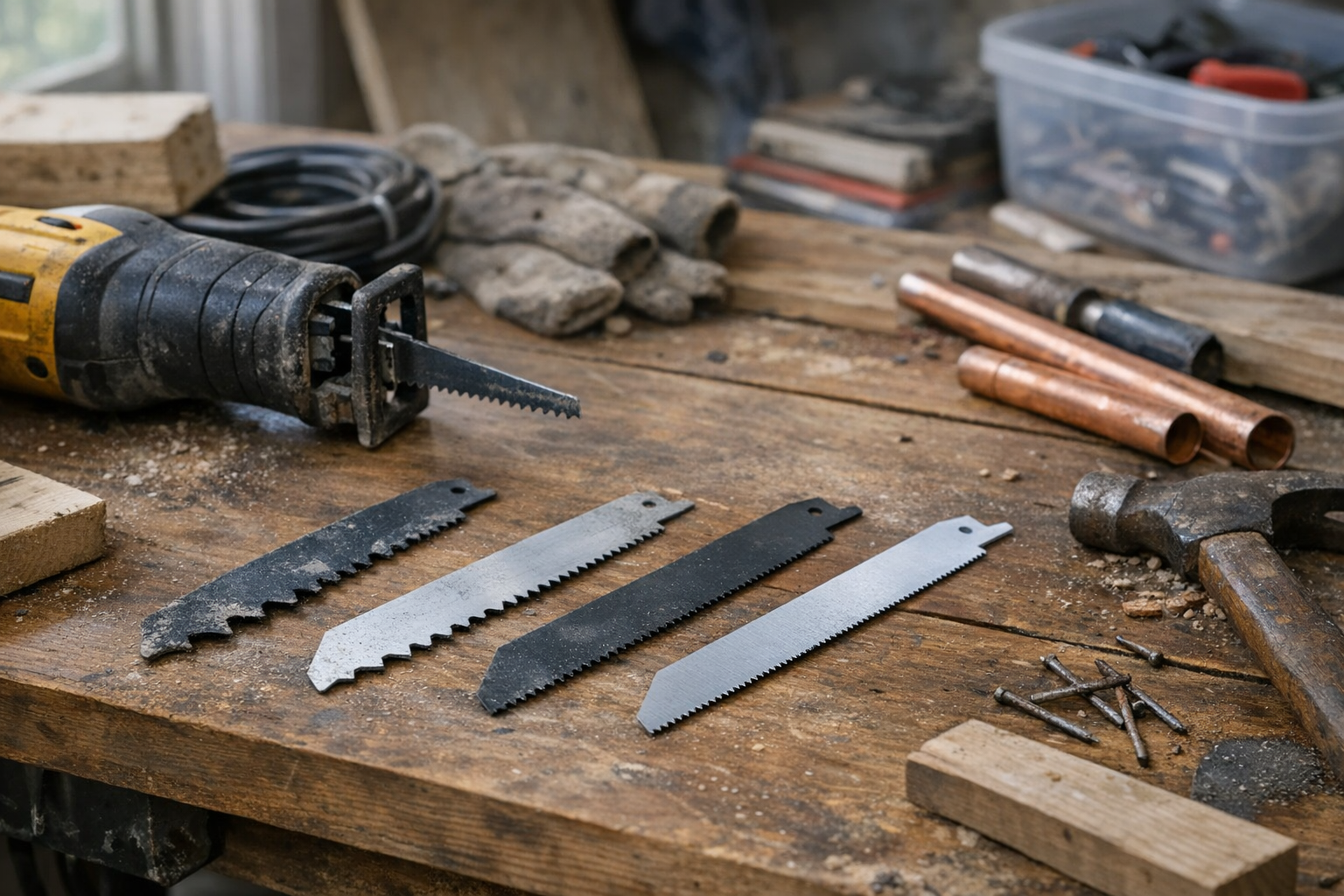
Why Tooth Count Matters in Reciprocating Saw Blades
When it comes to demolition or renovation, the power of your reciprocating saw is only part of the equation. The blade’s teeth per inch (TPI) profoundly affects how fast and smooth your cuts will be. Recognizing how TPI influences performance can save time, energy, and unnecessary blade wear on the job.
Understanding Teeth Per Inch (TPI)
TPI refers to the number of teeth on the blade within one inch. This simple measure reveals a lot about the blade’s cutting profile:
- Low TPI (6–10 teeth per inch): These blades have fewer, larger teeth, ideal for fast and aggressive cuts through wood and softer demolition materials.
- Medium TPI (10–14 teeth per inch): Offering a balance, these blades suit situations with mixed materials, including wood with embedded nails.
- High TPI (14 teeth and above): Designed for cutting metals, PVC, and finer finish work where smooth, snag-free cuts are essential.
Matching TPI to Your Material and Task
Choosing the right tooth count based on your cutting material can dramatically improve efficiency and blade longevity.
Wood and Fast Demolition Jobs
For framing, plywood, and soft demolition tasks, lower TPI blades (6–10) excel. With larger teeth, these blades bite deep and cut quickly, helping you blaze through wood and composite materials. They’re especially effective in wood that contains nails when you opt for bi-metal blades, which provide enhanced durability against hard fasteners.
Mixed Materials and Renovation Tasks
When you encounter a blend of wood, nails, and other materials, choosing a medium TPI blade (10–14) balances cutting speed with control. These blades reduce vibration compared to coarser blades, helping you maintain precision in renovation scenarios.
Metal, PVC, and Fine Finish Work
High TPI blades (14 and above) shine when you’re cutting metal pipes, conduit, or materials requiring a clean finish. Blades with 18 to 24 TPI and a narrow kerf (around .035″) minimize friction and heat buildup, extending blade life and providing smoother cuts that reduce post-cut cleanup.
The Interaction Between TPI, Stroke Speed, and Pressure
The number of teeth isn’t the only factor controlling speed and efficiency. Your saw’s stroke per minute (SPM) and how firmly you push the blade also matter:
- Low TPI blades perform best at high SPM (around 2,800 to 3,000 strokes per minute). Applying steady, moderate pressure lets the teeth slice through material cleanly without overheating.
- High TPI blades require slower, smoother strokes with less pressure to avoid tooth damage and excessive wear.
For example, forcing a coarse blade with excessive pressure may cause teeth to dull prematurely due to heat and friction.
Practical Experience: The Impact of Choosing the Correct TPI
Picture cutting an old pine window frame. Starting with a 14 TPI metal blade, the saw buzzes but barely makes headway. Switching to an 8 TPI demolition blade transforms the experience: the saw glides effortlessly, finishing the cut in a fraction of the time and with less strain on your arms.
This illustrates a key point — even the most powerful saw struggles if the blade isn’t right for the task. Adjusting tooth count can turn hours of effort into minutes of efficient work.
Balancing Speed and Finish Quality
While low TPI blades bite fast, their cuts tend to be rougher and cause more splintering. A simple two-step technique can raise your finish quality:
- Use a low TPI blade for the initial fast, rough cut.
- Follow up with a high TPI blade to smooth the edges and reduce tear-out.
This approach saves time overall and delivers cleaner results for visible cuts or finish carpentry tasks.
Refresh Tip: Let the Blade Work for You
One of the most common mistakes is forcing the saw blindly. Instead, try easing your grip and allowing the blade to cut at its own pace. Letting it glide steadily reduces wear, decreases vibration, and often speeds up the job. You’ll feel the difference between fighting the tool and collaborating with it. This subtle adjustment can be surprisingly powerful, especially when paired with the appropriate TPI blade.
Additional Recommendations for Blade Selection and Use
- Use bi-metal blades for demolition when nails or other fasteners are common, as these blades resist wear better.
- If using a reciprocating saw with orbital action, keep the orbital setting engaged for wood cutting, and turn it off when cutting metal — this improves blade longevity.
- Maintain an organized blade rack, so the right TPI blade is always within easy reach. Frequent blade changes aligned with material types pay dividends in cutting speed and blade life.
Conclusion
Your reciprocating saw is only as fast and effective as the blade it’s equipped with. Selecting the right tooth count based on your cutting material and adjusting your cutting technique unlock faster, cleaner cuts with less frustration. Whether demolishing old framing, slicing through pipes, or fine-tuning trim, understand your TPI—and let your blades work smarter, not harder.
Remember: start coarse for speed, shift finer for precision, and respect your blade to keep it sharp and ready.