
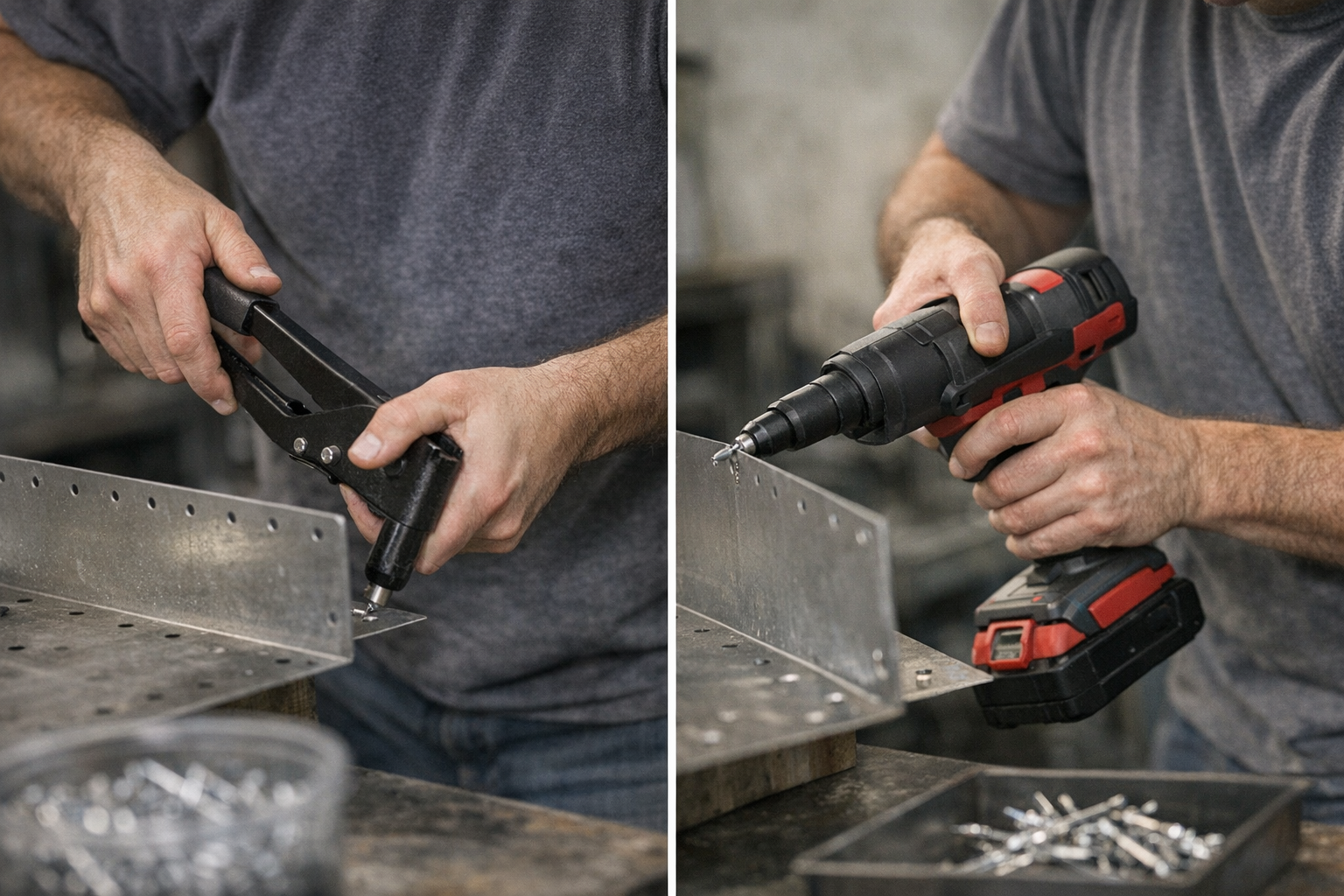
Understanding the Core Differences Between Manual and Electric Rivet Guns
When it comes to riveting, the choice between a manual and an electric rivet gun shapes not just the task’s pace but also your physical comfort and accuracy over a long day. Manual rivet guns rely entirely on your grip strength and arm power, requiring approximately 40 to 60 pounds of handle force with every squeeze. This force adds up quickly if you’re setting rivets repeatedly across a full work shift. Quality manual guns typically have hardened steel jaws and work best paired with a fine-threaded mechanism—often between 16 to 20 threads per inch—to allow a smoother, more controlled pull.
By contrast, electric rivet guns automate the setting process using motor-driven mechanisms. Most operate around 1,500 to 2,000 cycles per minute (SPM) and set rivets with just a quick press, significantly easing the operator’s effort. Battery-powered models equipped with at least 2.0Ah battery packs are common, and they absorb the repetitive strain that wears hands down during large jobs.
At face value, it might seem like a mere convenience, but the difference unfolds across comfort, consistency, and workflow efficiency, especially when dozens or hundreds of rivets are involved.
When Manual Rivet Guns Are Still the Right Tool
Manual rivet guns have undeniable benefits. Their simplicity makes them extremely durable—no concerns about power failures or electronic malfunctions. They’re self-contained, reliable, and can offer greater precision and control in tight or awkward spaces where an electric gun’s bulk may be a disadvantage.
They’re well suited for occasional, light-duty use, especially when working with softer rivet materials like aluminum or mild steel. For example, when dealing with oddly angled joints or tight crawl spaces, a low-profile manual gun can fit where electric counterparts cannot.
However, it’s essential to select a manual gun matched to your task. Insufficient leverage on a model for harder materials leads to fatigue, incomplete sets, and even damage to the tool or mandrels. Generally, handle length matters a lot; a 10-inch handle provides better mechanical advantage for tougher materials such as stainless rivets. An example from a recent project involved reattaching support brackets in a confined attic space where only a slim, single-hand manual gun fit—but even then, fatigue started setting in after around a dozen rivets due to repeated squeezing.
Why Electric Rivet Guns Are a Game-Changer for High-Volume Work
Electric rivet tools don’t just speed up rivet installation; they dramatically reduce user fatigue. A typical electric rivet gun can fully set a standard rivet in 1 to 2 seconds and deliver a consistent pulling force, around 10 kN (2,250 lbf), ensuring clean, reliable fastenings on a variety of materials, including harder metals.
Consistency is key when executing repetitive tasks. Fatigue often causes errors such as misaligned rivets or dropped mandrels; electric tools help reduce these mistakes by standardizing each cycle. However, one operational caution is necessary: avoid running the gun nonstop at maximum pace. Continuous rapid-fire use can overheat the motor and strain lithium-ion batteries. To prolong tool life and preserve battery health, take a 1 to 2 minute break after approximately 50 rivets, especially when working on thicker or heavier materials.
Additionally, plan your battery swaps smartly. Carry a fully charged spare and consider swapping when your battery charge hits 30% to avoid unexpected downtime. It’s a simple practice that many overlook but prevents frustrating delays that can disrupt project flow.
A Real-World Tip for Streamlining Your Riveting Workflow
One surprisingly effective workflow adjustment that benefits users of both manual and electric rivet guns is pre-staging your rivets and prepping holes in batches before continuity of installation. Gather 10 to 20 rivets at once and keep them within easy reach. Also, inspect and clear holes of burrs or debris with a countersink or reamer beforehand. This setup keeps you focused during the installation run without multiple disruptive motions to fetch rivets or troubleshoot fittings.
This setup improves pace and reduces hand strain with manual guns since you avoid frequent pauses. For electric tools, it aids consistent pacing and makes better use of each battery charge, ultimately reducing fatigue and mistakes.
How Switching to Electric Tools Changes the Installer’s Experience
Aside from speed and reduced effort, what strikes many is the noticeable drop in dread by the time they reach the end of a job. The cumulative hand fatigue from a manual gun tends to build gradually, often leaving operators with soreness and exhaustion at the finish. Moving to an electric rivet gun can almost vanish this weariness.
In one recent duct installation, technicians began manually setting rivets but switched to electric halfway through. The differences were clear: more consistent, error-free results and significantly less hand soreness reported by the end of the shift. Even those skeptical of powered tools ultimately adopted electric guns for routine jobs, reserving manual guns strictly for difficult, tight access areas.
Still, budget-conscious workers or those with infrequent riveting needs may find manual tools perfectly adequate. The key is recognizing job volume and matching the tool accordingly.
Listening to Your Hands: Practical Advice for Choosing the Right Rivet Gun
Rather than deciding solely based on speed or initial cost, pay attention to how your hands and body feel as the job progresses. Test both manual and electric rivet guns on typical tasks and check in with yourself toward the end of the run. Are your hands cramping? Is fatigue affecting your accuracy or enthusiasm? These clues often matter more than specs or brand hype.
For occasional or small-scale projects, a manual rivet gun can feel almost meditative and give you total control. But once your work shifts to repetitive assembly, electric rivet guns offer a meaningful boost in comfort, consistency, and ultimately, productivity.
Refresh Tip: Change Your Environment Between Runs to Maintain Focus
To combat mental and physical fatigue during long riveting stretches, try briefly changing your working position or environment between batches. Stepping outside for fresh air, stretching your hands and forearms, or doing simple wrist rotations can reset muscle tension and improve circulation. This subtle shift not only rejuvenates your body but also sharpens mental focus, reducing the risk of errors when you return to the task.
By integrating thoughtful breaks and workspace prep into your routine, each rivet set feels less like a grind and more like steady progress.
Wrapping Up: Matching Your Rivet Gun to Your Workload
Ultimately, the best rivet gun choice depends on the quantity and frequency of your riveting needs. Manual rivet guns excel in simplicity, reliability, and control for small or challenging jobs. They’re favorites when working in cramped spaces or with softer materials.
Electric rivet guns shine when volume, speed, and consistency matter most—offering a tangible reduction in physical strain that preserves your hands and keeps quality high throughout long shifts. Smart battery management and intentional workflow planning heighten these benefits.
Stay tuned to your body’s response through the day rather than just the initial ease of use. This approach ensures your tool choices support your health and productivity long-term.
Explore the full Gumboll collection to find compatible tools and accessories tailored to diverse riveting needs.