
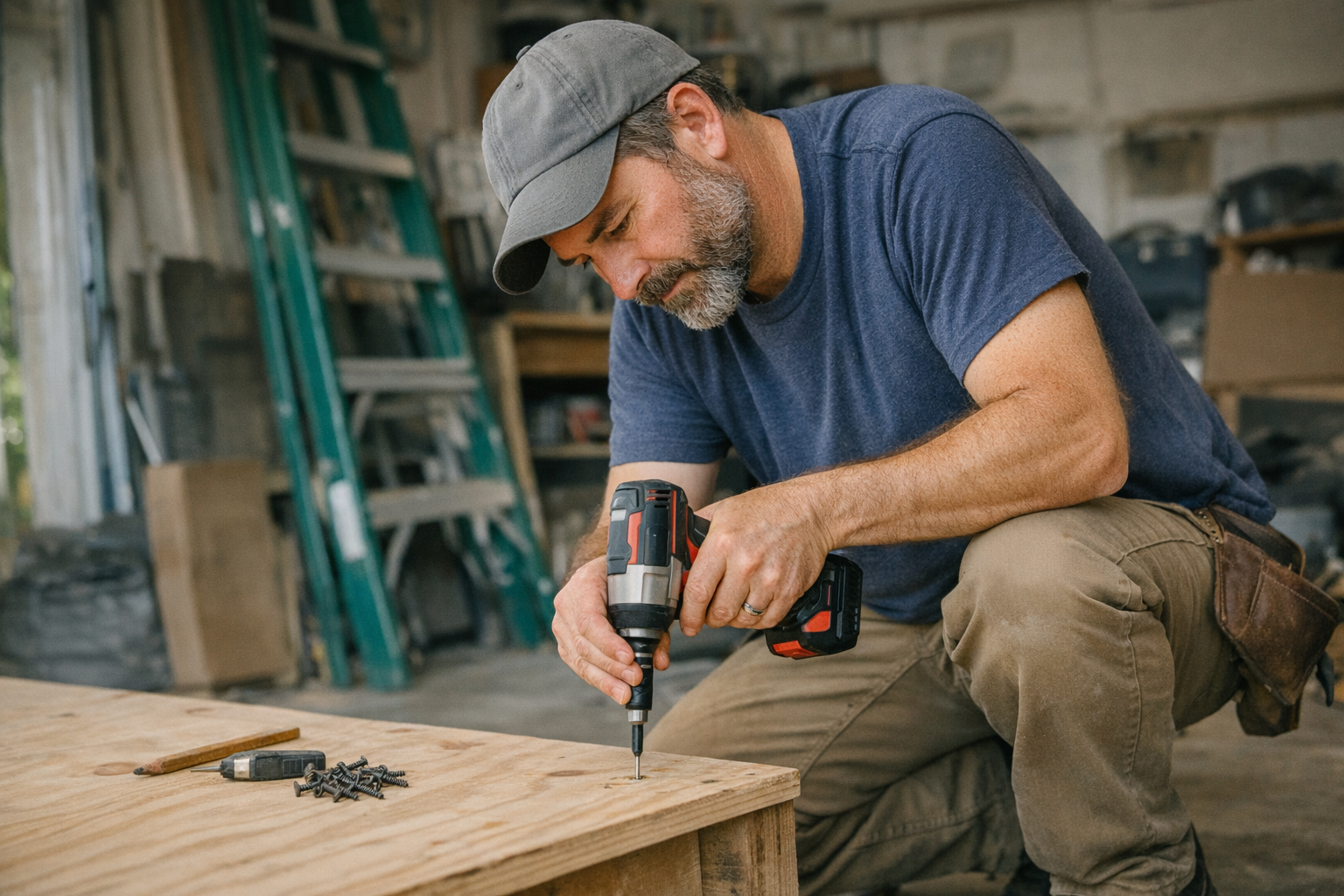
Few experiences are as aggravating as when your impact driver suddenly lets go of a screw. That sinking feeling when your bit spins helplessly in a screw head, which has lost its grip, can halt your project and turn a simple task into a frustrating ordeal. If you’ve ever dealt with stripped screws, you understand how quickly momentum can grind to a halt. The good news? Most stripped screws don’t have to happen at all. By understanding why screws strip and adopting a few practical habits, you can prevent these setbacks and keep your work moving smoothly.
Why Do Screws Strip?
Stripping a screw typically results from a loss of proper engagement between the driver bit and the screw head. While degraded or poor-quality screws and bits do contribute, the overwhelming majority of stripped screws come down to technique and tool use.
Here are the most common reasons screws get stripped:
- Driving at an angle: If the driver bit is not aligned squarely with the screw, the torque transfers unevenly, causing the bit to slip.
- Excessive speed or torque: Running the impact driver at its highest speed before full contact is made can cause the bit to cam out.
- Incorrect bit size or type: Using a bit that’s too small or the wrong profile for a screw’s recess puts extra stress on the heads and bit edges.
- Worn or low-quality bits: Bits with rounded or chipped edges fail to maintain grip and easily slip.
- Skipping pilot holes in dense materials: Hard woods or composite substrates increase resistance, making driven screws prone to stripping if the path isn’t prepared.
Additionally, under pressure to work fast or from lapses in attention, it’s easy for users to underestimate the importance of careful setup before each fastener. Impact drivers deliver high torque bursts, which amplify any misalignment or impatience.
Pause, Align, Then Drive: A Simple Habit to Prevent Stripping
In real-world scenarios, minor adjustments to how you approach each screw can make all the difference. A helpful technique I’ve relied on is to literally pause for a second before squeezing the trigger.
What does this look like in practice?
- Set the bit in the screw head carefully: Place the bit firmly inside and visually confirm it’s fully seated.
- Check alignment: Ensure the driver shaft and your wrist are aligned at a 90-degree angle to the work surface.
- Feel for engagement: The bit should “click” or settle squarely into the recess, signaling it’s properly seated.
- Adjust as needed: If anything feels off, lift and reposition to avoid slipping.
This deliberate one-second pause before each drive helps maintain control, reduces slip risk, and prevents screw head damage. While it may feel like a small thing, the impact on your build quality and frustration level is profound.
Tip: Use the Correct Bit and Pilot Holes
Choose bits that match the screw head perfectly—Phillips #2, Torx T20, or whatever fits your screw type. Impact-rated bits are worthwhile because they withstand the repeated torque shocks better, maintaining sharper edges longer.
When working with wood, drilling a pilot hole appropriate for the screw size helps reduce driving resistance and splitting, especially in hardwoods. For softwoods, a 1/8″ pilot hole often suffices. Adjust your impact driver’s speed to a moderate setting (1000–1500 RPM) and start with a lower torque clutch setting, increasing only as necessary. This prevents overdriving and cam-out events.
The Role of Speed and Torque Settings
Driving screws too quickly increases the risk of stripping. Most impact drivers can exceed 2500 RPM in maximum speed, which is usually too fast if you haven’t confirmed proper bit-seat and alignment. Starting slow allows the screw head to engage fully before the tool ramps up torque.
Using torque settings judiciously is just as important. Lower clutch settings provide controlled torque, preventing the driver from blasting the screw head once reach resistance limits. This is especially critical when installing flooring or hardwood decking fasteners, where precision matters.
Tip: Use Both Hands on Long Screws
When driving longer screws (2 inches or more), like deck or subfloor screws, hold the driver with both hands. This adds wrist stability and allows better control over alignment and pressure. Also, operate on a medium-to-high torque setting rather than drill mode to apply consistent force without risking excessive overdrive.
Refreshing Your Approach: From Frustration to Flow
If stripped screws have felt like an unavoidable hassle in the past, try this subtle mindset shift: see each fastener as its own mini project. This fresh perspective encourages you to slow down momentarily and give proper attention exactly when it counts.
Instead of rushing to finish or assuming the driver will compensate for misalignment, remind yourself that a smooth, well-aligned start sets up the rest of the drive for success. This not only prevents damage but leads to cleaner, more satisfying results.
By integrating this mental reset, you transform the task from a repetitive chore into a measured, quality-driven process. Over time, this builds confidence and reduces anxiety about stripped screws completely.
Real-World Impact
On a recent project assembling garage shelving with a friend, implementing the pause-and-align habit cut our stripped screws from multiple per hour down to zero. This was despite using the same screws and nearly new impact driver as before.
The difference was clarity and control. My friend, who had always accepted stripped screws as an unavoidable nuisance, now credits this simple routine for saving time and headaches during follow-up deck installation. In fact, he completed hundreds of screws with no issues—a testament to how much technique matters over gear.
Summary: The Small Shift That Saves Time
Stripped screws are nearly always preventable. The key lies in adopting a few purposeful habits: pausing to check bit alignment, matching your bit size and type to your screws, drilling pilot holes when needed, and adjusting speed and torque settings appropriately.
This approach requires no new tools, just a moment’s attention before each screw drive. By making this mental and physical habit second nature, you not only prevent stripped screws but improve the quality, feel, and pace of your projects.
Next time you pick up your impact driver, take that brief moment before pressing the trigger. Set yourself up to succeed, and watch your projects flow uninterrupted.