
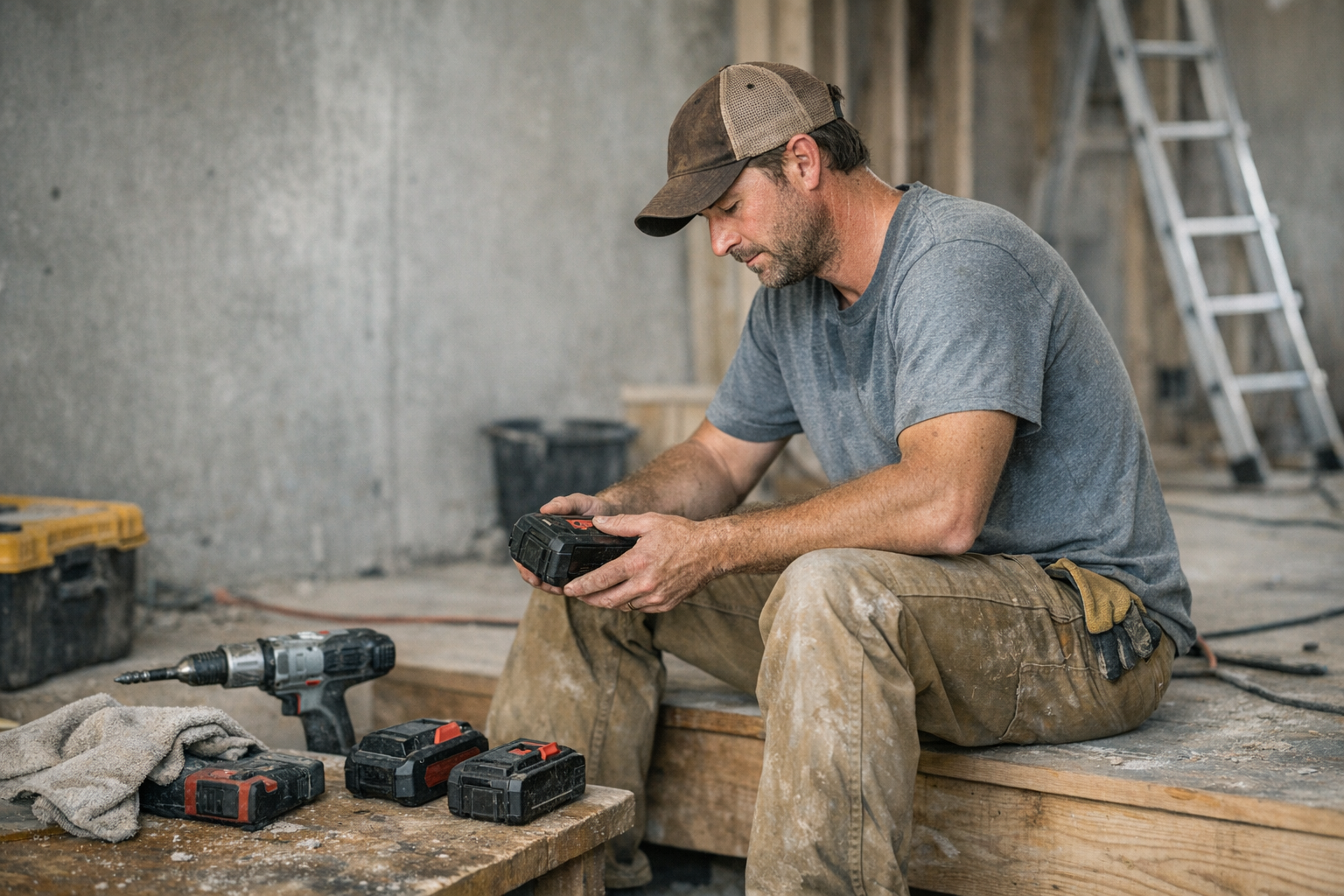
Understanding Your Drill’s Battery Drain on Tough Jobs
When working on demanding projects—whether drilling through reinforced concrete or assembling rugged wooden frameworks—the rapid drain of your drill battery is a familiar and frustrating reality. Heavy materials and high torque demand more current, often pushing batteries beyond their comfortable limits. For example, hammer drills operating on concrete can consume well over 10 amps continuously, which rapidly exhausts standard 2.0Ah or 4.0Ah batteries.
Battery life isn’t just depleted by large workloads; inefficiencies like stalling, incorrect tool settings, or overusing hammer mode on softer materials can also accelerate power loss. Running drills at maximum RPMs without adjusting to the material’s demands leads to wasted battery juice and overheating.
Practical Habit #1: Allow Batteries to Cool Down Before Charging or Reuse
One surprisingly impactful habit is giving batteries time to rest between uses. After intense drilling, batteries heat up internally to temperatures that can exceed their optimal operating range (around 20–25°C or 68–77°F). Plugging a hot battery directly into the charger reduces the charge rate or triggers safety cutoffs, slowing the recharge process and accelerating battery degradation.
Similarly, using a cold battery straight from a chilly toolbox or vehicle affects performance because cold cells deliver less power until warmed. By simply setting your batteries on a dry, shaded surface and letting them reach room temperature for 15–20 minutes before swapping them back into the drill or charger, you preserve battery health and improve runtime during your job.
Tip:
Carry a small towel or cloth to wipe off dust and sweat before swapping batteries. This helps keep contacts clean and supports efficient energy transfer.
Optimizing Drill Use: Speed, Pressure, and Bit Maintenance
Adjusting how you work with your drill can significantly extend battery life. Instead of blasting at maximum speed, lowering drill RPM to a controlled 500–800 (depending on the job) reduces current draw and heat buildup. Combine this with steady but firm pressure to maintain bit engagement without stalls or overdriving.
Also, maintaining sharp, job-appropriate bits reduces friction and prevents unnecessary battery drain. A dull carbide bit, for example, can soak up energy while delivering poor progress, frustrating both you and your pack. Opt for SDS-plus bits for holes under 20 mm, and SDS-max bits for larger drilling, ensuring the bits are clean and in good condition.
Pre-Drilling Strategy
Before driving full force, mark your holes and begin with short, gentle trigger pulls to “start” the hole. This reduces drill walking and minimizes sudden current spikes, conserving battery power for when you need it most.
Keep Tools Clean: A Simple Yet Often Overlooked Step
Accumulated dust and debris inside your drill can hinder motor performance, forcing it to work harder and consume more power. Regularly clean around vents and battery contacts using compressed air or a dry brush. Dirty contacts cause voltage drops, leading to premature tool shutdown or misleading low-battery warnings.
Furthermore, clearing cooling vents prevents overheating, which directly improves your drill’s operational efficiency and battery consumption. Taking a few minutes after each session to maintain your drill can translate into significant runtime improvements over weeks and months.
Battery Rotation and Management
If you have multiple battery packs, rotate their use instead of draining and charging a single one repeatedly. This balances wear across all packs, prolonging their overall lifespan and ensuring consistent performance throughout your project. Pro-grade batteries typically endure 500 to 1,000 full charge cycles before noticeable performance drops, so mindful rotation keeps you closer to these optimal numbers.
Refresh Your Routine: The Power of Mindful Pausing
In the hustle of construction or renovation, it’s tempting to swap batteries immediately and keep pushing. But pausing to let batteries “breathe” is a subtle, restorative habit that pays big dividends. This pause not only helps thermally stabilize the cell chemistry but mentally gives you a brief moment to review progress, plan your next moves, and adjust your technique if needed.
When I started carrying a small towel and designated shady resting spots for batteries on hot summer projects, the change was tangible. Batteries stayed cooler, avoided thermal shutdowns, and maintained steadier output even during afternoon heat spikes. Integrating these pauses turned an exhausting day into more sustainable work sessions.
Final Thoughts
Extending your drill battery’s life on heavy jobs comes down to thoughtful adjustments: letting batteries cool, moderating drill speed and pressure, keeping gear clean, pre-drilling smartly, and rotating packs. Small behavioral changes compound, helping you avoid unexpected downtime and expensive battery replacements.
Next time you head to the jobsite, consider whether your batteries have the rest they need between swaps. That few minutes’ pause can keep you drilling smarter, longer, and with less hassle.