
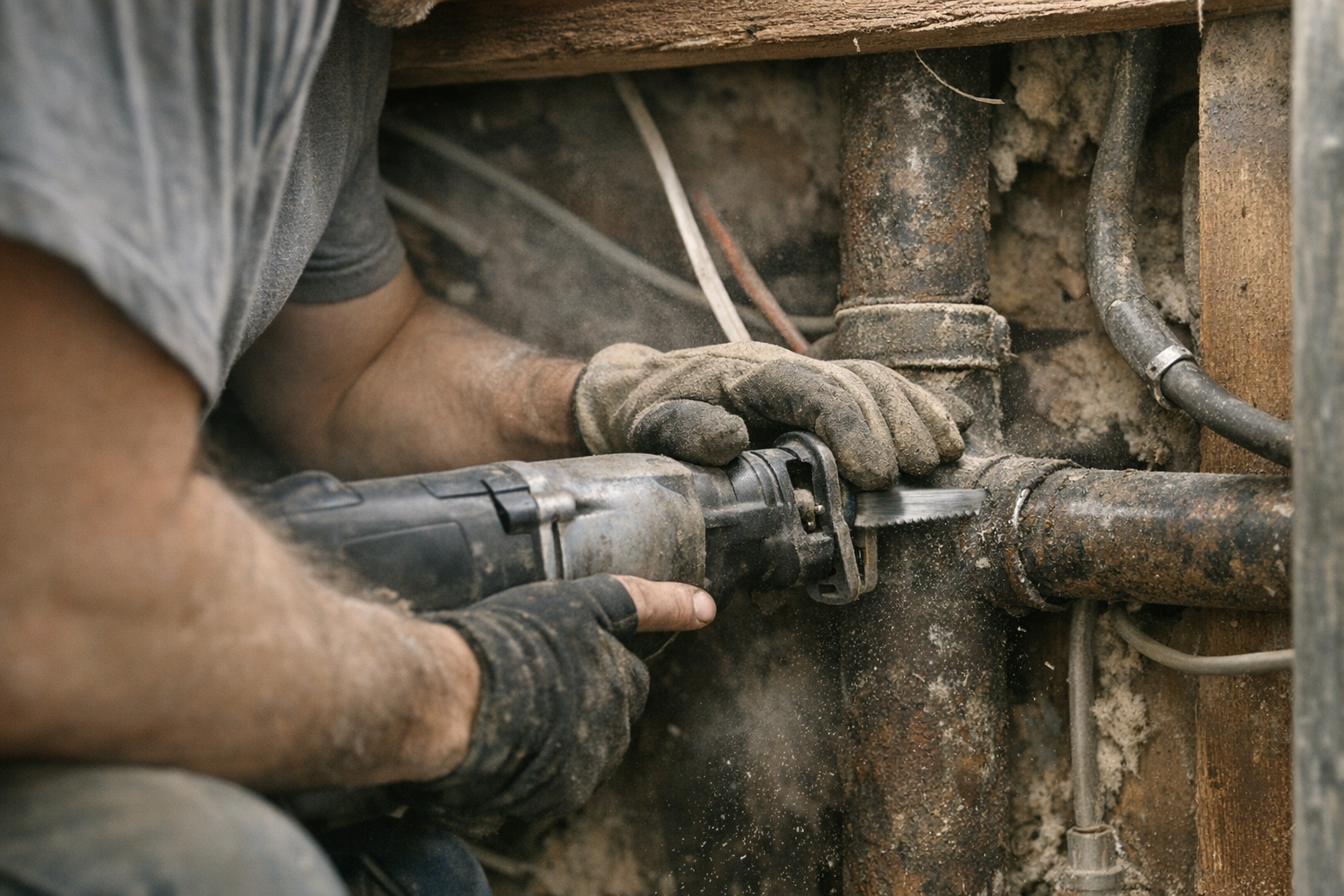
In the world of demolition, efficiency and precision are everything—especially when working within tight, confined spaces where every movement counts. One of the most underestimated challenges is controlling the vibration generated by reciprocating saws, tools whose power and utility become liabilities if not handled with care. The difference between a clean, controlled cut and a frustrating, exhausting ordeal often boils down to how vibration is managed.
Why Vibration Control Is Crucial in Confined Work Areas
When demolition zones leave you cramped—think crawlspaces, utility closets, or areas wedged between structural elements—vibration doesn’t just affect the tool’s performance; it directly impacts your ability to work safely, accurately, and comfortably. Unlike open areas where you can adjust your stance, reposition the workpiece, or let the saw swing naturally, tight quarters limit your options. Vibrations transfer more abruptly through your body and onto surrounding structures, magnifying fatigue and increasing the risk of errors.
Each pulse of vibration is felt as a jolt—a transfer of kinetic energy that quickly exhausts your hands, wrists, and arms. Over time, this fatigue reduces your steadiness, making precise cuts difficult to maintain and leading to rough edges or damage to adjacent materials that ideally should remain undisturbed. In addition, the unpredictable vibrations sometimes cause the saw blade to “skate” or deviate from the intended cut line, especially when awkward angles force compromised tool positioning.
Choosing the Right Blade and Settings to Reduce Vibration
Your blade selection and saw settings are the first line of defense against excessive vibration. For most confined demolition tasks involving multiple materials—such as wood framing, drywall, and metal pipes—a bi-metal blade with 10 to 14 teeth per inch (TPI) provides a balance of durability and control. This TPI range enables smoother cuts and reduces kickback by minimizing aggressive tooth engagement.
Opting for a thinner kerf blade, usually around 0.9 to 1.1 millimeters, also helps significantly. A narrower kerf means less material is removed with each stroke, reducing resistance and therefore the magnitude of vibration transmitted back to your arms. This aspect is crucial when space restricts free movement and torque absorption.
Beyond blade choice, consider tuning your reciprocating saw’s speed. Instead of running the tool at its top strokes per minute (SPM)—often upward of 3,000—dial it back to 1,800 to 2,200 SPM for delicate or plunge cuts near fragile surfaces. This slower pace lowers vibration amplitude and enhances control, allowing you to work steadily without sacrificing efficiency.
The Physical Toll: Vibration’s Effect on Fatigue and Accuracy
Vibration-induced fatigue manifests quickly, even in experienced operators. Tingling fingers, wrist stiffness, and shoulder soreness can appear after only a few minutes of sustained use under high-vibration conditions. The saw gradually “feels heavier” as your body struggles to compensate for the shaking.
In this state, your ability to keep the blade on the cut line deteriorates. Increased movement leads to rough cuts, unnecessary material removal, and potential damage to adjacent surfaces or hidden utilities. Beyond immediate physical discomfort, excessive vibration raises the risk of accidents caused by tool kickback or loss of control.
A common rookie mistake is to run the saw at full speed with aggressive orbital action in every situation, regardless of space constraints. This might speed some cuts but often accelerates fatigue and magnifies errors where precision is critical. In tight demolition spots, controlling tool speed and stroke action is essential to reducing these effects.
Real-World Insight: Learning to Adapt
Reflecting on early demolition experiences, many professionals recount moments when fatigue set in too soon, and cuts became sloppy—not due to lack of experience but from underestimating vibration’s impact. For example, working underneath a low stairwell with elbows pinned and shoulders pressed against framing made it impossible to adjust stance or leverage. At that point, it became clear that a change not only in posture but also in grip and saw handling was necessary to maintain effective work.
The Loosened Grip Technique: A Practical Approach to Vibration Management
Conventional wisdom often suggests gripping the tool as tightly as possible for control. However, in tight demolition settings, this can backfire by increasing the amount of vibration transferred into your hands and arms. Instead, adopting a deliberately relaxed but secure grip helps absorb and dissipate the saw’s natural movement more effectively.
How to Implement the Loosened Grip Technique:
- Anchor the Front Boot Firmly: Position the tool’s front shoe or boot flush and firmly against the cut surface. This anchoring reduces tool jump and stabilizes the blade path, letting the saw absorb some of the vibration through the material.
- Relax Your Trigger Hand: Instead of choking the handle, grip it firmly but without excess tension. Your fingers should engage the trigger securely without causing your knuckles to whiten. It’s about controlling, not constraining, the saw.
- Let the Supporting Hand Absorb Movement: Place your other hand lightly on the barrel or body of the saw. It should stabilize the tool without clamping it rigidly. This way, minor ‘jitters’ caused by vibration are smoothed out rather than directly transferred to your muscles.
This technique feels counterintuitive initially, especially if you’re used to holding tight to power tools. However, the reduction in shock felt throughout your arms is substantial—and muscle fatigue sets in much more slowly.
A Subtle Mindset Shift for Sustained Energy
As a fresh tip, consider viewing vibration not as an enemy to be fought but as a natural motion to flow with. Instead of channeling energy into resisting every tremor, take brief micro-breaks between cuts to shake out your hands and reset your grip. This conscious relaxation helps prevent cumulative tension, improves blood flow, and recalibrates your motor control over the saw. Over time, this mindset reduces overall mental and physical strain.
Optimizing the Work Environment for Reduced Vibration
Beyond personal technique and tool setup, subtle environmental adjustments can make a marked difference. If you can clear even a few extra inches of space around the work area, you’ll gain better angles and more comfortable access—translating into less forced body positioning and tool angling.
Also, be vigilant about loose materials or elements near your cut line. Unfastened panels, rattling pipes, or debris can amplify vibration response or cause unpredictable tool behavior. Securing these before cutting can simplify control and minimize unnecessary feedback.
Final Thoughts: No One-Size-Fits-All Solution, But Techniques Matter
There’s no magic upgrade, blade, or attachment that renders reciprocating saws vibration-free, especially in cramped demolition jobs. Instead, mastery comes from understanding and adapting to your tools and environment—using the right blade and speed, employing a relaxed yet secure grip, and stabilizing the tool against the workpiece. These adjustments combine to reduce fatigue, improve accuracy, and help you push through tough demolition tasks more comfortably.
Every job is a balancing act; some days the technique sings perfectly, while others remind you to pause and rethink. With practice and mindful handling, you can extend your endurance and maintain quality, even when wedged between walls, pipes, and joists.
Further Resources
If you’re interested in exploring compatible tools and accessories that complement this approach, check out the full Gumboll collection for a wide variety of reciprocating saw blades and accessories designed for various demolition challenges.